
Finance Prof
Well-known member
Good read from my friend Boz. Totally agree with him.
You can divide the views on Argentina and Milei into three camps:
The following is from my newsletter from December 2024 about the hype around Milei’s economic reforms:
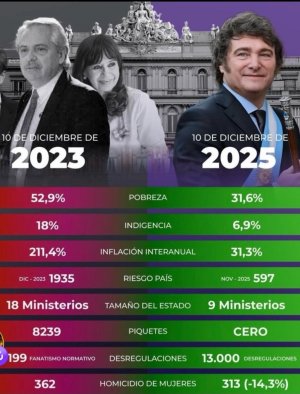
Milei is still being compared to Fernandez. More than halfway through Javier Milei’s term in office, Argentina’s inflation rate has been higher in every month than it was for nearly all of Macri’s term in office. Inflation under Milei is higher than it was for the entire term of President Cristina Fernandez de Kirchner. It’s not normal to have 30% annual inflation, even in Argentina. But Milei gets a pass with lots of media outlets praising his efforts to reduce inflation because he’s still compared to his predecessor, who left the current administration with something around 200% inflation.
Milei’s political opponents are fractured and weak. The Peronist infighting continues. Any semblance of a center-left struggles to survive amid the Peronist movement. Similarly, the center-right led by Macri has been almost completely subsumed or neutralized by Milei’s LLA. How does a president with a 40% approval rating appear to be doing so well? There is no other political leader even remotely close to his level of support. Despite the country’s polarization, the mediocre LLA organization has become a serious national force as every other political movement has broken apart.
Bubbles inflate for longer than anyone expects. One reason to be concerned about 2026 is that Argentina faces $20 billion in debt payments and only has perhaps $10 billion in reserves that it can tap easily. Yet Milei keeps using reserves to defend the peso and paying off debt with more debt and faces no consequences from international markets. It’s easy to kick the can down the road when enabled by billions of dollars in assistance from the US government and the international financial community. Argentina can’t afford its 2026 debt payments, but it’ll make them because lenders will simply refinance the debt for later, and the US government will back it. It’s great for Milei’s government today. It potentially inflates the bubble for several years.
In particular, the IMF won’t stop Milei. When Argentina missed its net reserve target last year, the IMF granted Argentina a waiver, lowered the target by $5 billion, and continued to finance it. The IMF will grant a waiver again in early 2026 because Argentina couldn’t hit the new lower target. And another waiver will almost certainly be granted again later this year or early next year when Milei misses the targets yet again. The IMF will keep enabling Milei because 1) Trump wants it, and 2) The IMF looks bad if its decisions are the ones that cause Argentina to crash. The IMF can’t punish a government that is rhetorically more extreme than they are on austerity and fiscal discipline without losing credibility with other countries. The combination of support from Trump and the IMF will keep Milei afloat even as his economic team struggles to paint a positive story.
The bubble pop will be swift and with only limited warning. When it first starts to drop, investors will think it’s just a temporary blip in the Milei boom, similar to the one that happened in September of last year. Before the big bubble bursting, we may even see another false drop lasting a month before rebounding, giving investors confidence that sticking with Milei is the right strategy. The mechanics of the bubble bursting will likely see the president promising he will maintain a policy to make it through, only to be forced to devalue and/or restructure debt with a sudden announcement that shocks everyone.
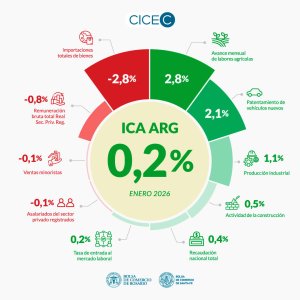
A few sectors will do ok. Argentina’s agricultural and mining sectors remain strong spots in the economy. In many ways, they are propping up Milei right now as manufacturing and urban service economy continues to struggle. Last month’s economic growth came from a nice little summertime farm boom. Meanwhile, 21,000 businesses have shut down during Milei’s term, and formal private payroll employment hasn’t grown in a decade. The labor reform may make a small dent, but won’t turn those numbers around in the next 12 months. Meanwhile, the same two sectors that have helped Milei so far may ride out the bubble popping with less damage than the rest of the economy.
The 2027 election is an enormously risky moment. One key part of the Milei bubble is the market’s conviction that Milei is very likely to win reelection and the Peronists are very unlikely to win. The moment the market doubts that Milei might win, the economy will suffer, and that will create a negative feedback loop that makes it less likely that Milei will win. Think back to the 2019 election. When the Peronists overperformed in the August PASO and appeared likely to win later that year, that’s when the dam burst and the Macri bubble fully deflated. If you had to make a prediction for the Milei bubble popping (despite everyone telling you not to try to time bubbles), a parallel scenario to 2019 occurring in 2027 would be the best bet.
Otherwise, a Milei reelection counterintuitively crashes the economy before 2029. If Milei is reelected, investors will suddenly feel reassured and the people who argue, “this time is different” will say they are vindicated. It will be a brief moment of relief followed by the super-inflated bubble bursting. Milei’s reelection will force investors to confront the fact that his economic reforms still haven’t fixed the debt, currency, or foreign reserve problems at the heart of Argentina’s economy. As difficult as the debt payments are in 2026, Argentina’s debt payments increase every year for the next six years. It’s a wall of debt that a few points of fiscal surplus will never pay back. Further, investors will also be forced to recognize that politics is a pendulum and the Milei side can’t remain in power forever. The Peronists will eventually reorganize and make a strong play for national power. For those reasons, the refinancing game stops, and the currency, which Milei promises to dollarize but never does, plummets.
And yet, it’s also a confidence game. Argentina’s economy is propped up by:
To conclude:

 boz.substack.com
You can divide the views on Argentina and Milei into three camps:
- Everything is terrible. This is the take of the Peronists, who see Milei undermining the economic safety net for the one-third of Argentines who live in poverty and the many others who struggle economically, even as the macroeconomic indicators come back positively and the wealthy and business elite are doing better than ever. I don’t deal with this view much in today’s newsletter, but be aware that it exists and represents a political threat to Milei.
- This time is different (in a good way). This is the take of Milei and his backers, who think the president’s reform agenda is the path to ending Argentina’s historic boom and bust cycles.
- The Milei hype is a bubble. It’s great on the way up, but an eventual crash is practically inevitable. This remains my view.
The following is from my newsletter from December 2024 about the hype around Milei’s economic reforms:
Fourteen months later, even though I still don’t give market advice, I feel like I nailed that prediction about riding the wave of Argentina enthusiasm. Unfortunately, I see many analysts right now mistaking the economic bubble for something permanent. And yet, despite my view that Argentina’s positive economic image is a bubble, this is still not the newsletter where I tell you everything is going to crash in the next month or two. The Milei bubble has plenty of room left to run. But if you are invested in Argentina, you are no longer surfing a wave. You are following a can that is being kicked down the road, hoping to enjoy the boom while it exists, but exiting before it hits the messy end.Will it continue into 2025? I’d absolutely bet on it going another year or two. All the conditions are lined up and the enthusiasm is going to push things forward. I don’t give market advice, but this is not the newsletter where I tell you it’s all going to crash and burn soon. This is one where I say that I think the momentum is there and people should ride Milei’s chainsaw like a surfboard….
…Don’t mistake a great 2025 and 2026 for Argentina becoming a developed market. Don’t confuse the boom years of a boom-bust cycle with being a permanent escape from that cycle.
What is going right for Milei today?
The president has new influence in Congress. The passage of labor reform this month - 12-hour shifts, reduced severance, restrictions on strikes, gig workers excluded from labor law - is likely the first of a string of reform bills that the president and his party push through Congress. For tax reform, we’ll see a similar pattern as the labor reform, an extreme proposal being slightly watered down by the moderates in Congress and then passing, giving the government what it needs, even as they complain about it not being quite what they wanted. Pension reform will be the hardest lift; if anything gets done, it’ll be really watered down because that is always a political third rail, but markets will cheer even the most minimal improvements there.Milei is still being compared to Fernandez. More than halfway through Javier Milei’s term in office, Argentina’s inflation rate has been higher in every month than it was for nearly all of Macri’s term in office. Inflation under Milei is higher than it was for the entire term of President Cristina Fernandez de Kirchner. It’s not normal to have 30% annual inflation, even in Argentina. But Milei gets a pass with lots of media outlets praising his efforts to reduce inflation because he’s still compared to his predecessor, who left the current administration with something around 200% inflation.
Milei’s political opponents are fractured and weak. The Peronist infighting continues. Any semblance of a center-left struggles to survive amid the Peronist movement. Similarly, the center-right led by Macri has been almost completely subsumed or neutralized by Milei’s LLA. How does a president with a 40% approval rating appear to be doing so well? There is no other political leader even remotely close to his level of support. Despite the country’s polarization, the mediocre LLA organization has become a serious national force as every other political movement has broken apart.
Bubbles inflate for longer than anyone expects. One reason to be concerned about 2026 is that Argentina faces $20 billion in debt payments and only has perhaps $10 billion in reserves that it can tap easily. Yet Milei keeps using reserves to defend the peso and paying off debt with more debt and faces no consequences from international markets. It’s easy to kick the can down the road when enabled by billions of dollars in assistance from the US government and the international financial community. Argentina can’t afford its 2026 debt payments, but it’ll make them because lenders will simply refinance the debt for later, and the US government will back it. It’s great for Milei’s government today. It potentially inflates the bubble for several years.
In particular, the IMF won’t stop Milei. When Argentina missed its net reserve target last year, the IMF granted Argentina a waiver, lowered the target by $5 billion, and continued to finance it. The IMF will grant a waiver again in early 2026 because Argentina couldn’t hit the new lower target. And another waiver will almost certainly be granted again later this year or early next year when Milei misses the targets yet again. The IMF will keep enabling Milei because 1) Trump wants it, and 2) The IMF looks bad if its decisions are the ones that cause Argentina to crash. The IMF can’t punish a government that is rhetorically more extreme than they are on austerity and fiscal discipline without losing credibility with other countries. The combination of support from Trump and the IMF will keep Milei afloat even as his economic team struggles to paint a positive story.
So when does the bubble pop?
I don’t know. Timing precisely when bubbles pop is a foolish game. That said, I do believe a few things:The bubble pop will be swift and with only limited warning. When it first starts to drop, investors will think it’s just a temporary blip in the Milei boom, similar to the one that happened in September of last year. Before the big bubble bursting, we may even see another false drop lasting a month before rebounding, giving investors confidence that sticking with Milei is the right strategy. The mechanics of the bubble bursting will likely see the president promising he will maintain a policy to make it through, only to be forced to devalue and/or restructure debt with a sudden announcement that shocks everyone.
A few sectors will do ok. Argentina’s agricultural and mining sectors remain strong spots in the economy. In many ways, they are propping up Milei right now as manufacturing and urban service economy continues to struggle. Last month’s economic growth came from a nice little summertime farm boom. Meanwhile, 21,000 businesses have shut down during Milei’s term, and formal private payroll employment hasn’t grown in a decade. The labor reform may make a small dent, but won’t turn those numbers around in the next 12 months. Meanwhile, the same two sectors that have helped Milei so far may ride out the bubble popping with less damage than the rest of the economy.
The 2027 election is an enormously risky moment. One key part of the Milei bubble is the market’s conviction that Milei is very likely to win reelection and the Peronists are very unlikely to win. The moment the market doubts that Milei might win, the economy will suffer, and that will create a negative feedback loop that makes it less likely that Milei will win. Think back to the 2019 election. When the Peronists overperformed in the August PASO and appeared likely to win later that year, that’s when the dam burst and the Macri bubble fully deflated. If you had to make a prediction for the Milei bubble popping (despite everyone telling you not to try to time bubbles), a parallel scenario to 2019 occurring in 2027 would be the best bet.
Otherwise, a Milei reelection counterintuitively crashes the economy before 2029. If Milei is reelected, investors will suddenly feel reassured and the people who argue, “this time is different” will say they are vindicated. It will be a brief moment of relief followed by the super-inflated bubble bursting. Milei’s reelection will force investors to confront the fact that his economic reforms still haven’t fixed the debt, currency, or foreign reserve problems at the heart of Argentina’s economy. As difficult as the debt payments are in 2026, Argentina’s debt payments increase every year for the next six years. It’s a wall of debt that a few points of fiscal surplus will never pay back. Further, investors will also be forced to recognize that politics is a pendulum and the Milei side can’t remain in power forever. The Peronists will eventually reorganize and make a strong play for national power. For those reasons, the refinancing game stops, and the currency, which Milei promises to dollarize but never does, plummets.
But really, when does the bubble pop?
I still don’t know. While I think the Milei bubble should crash before the 2027 reelection campaign, I’m also aware that (as I wrote above), bubbles last longer than most people think they can, and Milei has international support to keep kicking the can down the road. So my gut instinct about a pre-election crash may very well be wrong.And yet, it’s also a confidence game. Argentina’s economy is propped up by:
- People who believe this time is different.
- People riding what they know to be a bubble and looking to exit before the crash.
To conclude:
- There is still room for the Milei hype bubble to run.
- It will burst eventually.
- Follow the kicked can of debt down the road at your own risk.
Milei’s economy: From surf the wave to kick the can
I don't know when the Milei hype bubble will pop. Probably not tomorrow. Definitely before 2030.
boz.substack.com