Explore, connect, thrive in
the expat community

Expat Life: Local Discoveries, Global Connections

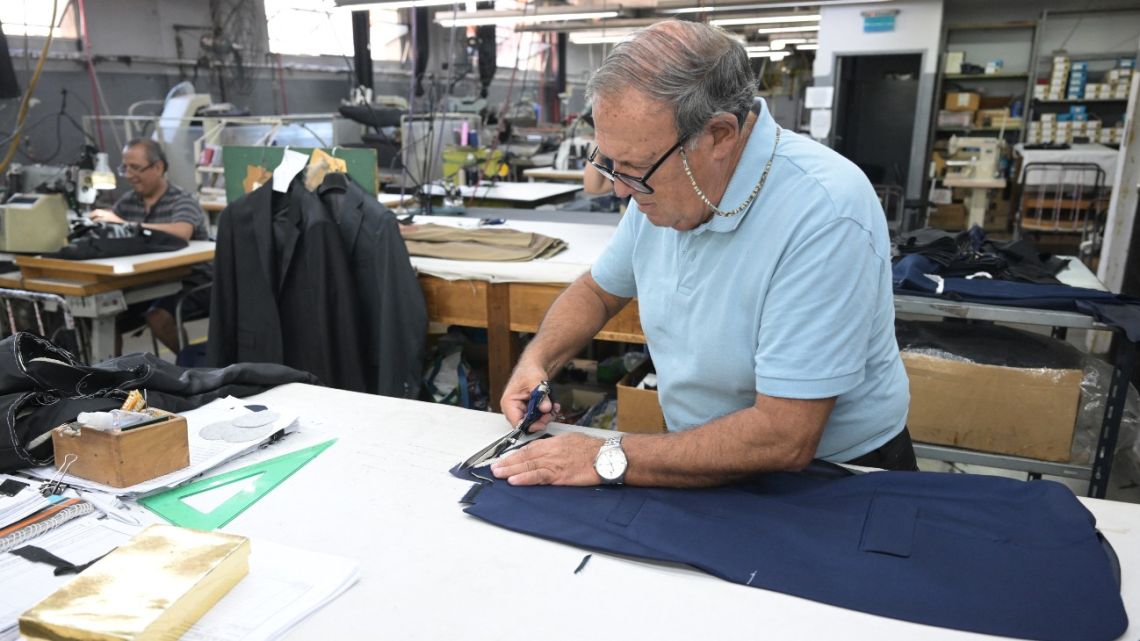
Argentina’s textile sector reels as import surge hits job

I don't feel sorry for the owners of these factories. I do feel for the employees. Many of them will probably go months without finding another job. A wave of layoffs in that entire sector.
 
I don't feel sorry for the owners of these factories. I do feel for the employees. Many of them will probably go months without finding another job. A wave of layoffs in that entire sector.
It seems like none of these factories have invested in them or improving the technology in them. Is there really any hope for any of these companies to realistically compete against China and the cheap imports?
 
It seems like none of these factories have invested in them or improving the technology in them. Is there really any hope for any of these companies to realistically compete against China and the cheap imports?

There isn't much hope for most of these companies. As you mentioned, they haven't upgraded their machinery and they aren't efficient. They had a lock on the market with protectionist policies. Now they are dying a quick death. Only a few niches will make it. Higher end or luxury established brands in the local market. The traditional mass-market textile industry is going to keep dying off in Argentina.

This government has shown they will keep reducing the protectionist barriers and more and more cheaper Chinese goods will flood the market. The benefit is the consumers are winning.

But the downside is more and more jobs in the industry as going to be lost forever. I know this industry well. Argentina can't compete with China or other Asian countries. Labor is getting too expensive now in Argentina but taxes are the real problem. Taxes are very high for employers. The logistics are also tricky and expensive.

One advantage Argentina had before was electricity and gas and water were very cheap but those are all jumping up and becoming expensive. Most of these factories have no scale or automation and credit and financing is very high in Argentina.

To give you an idea how ridiculous it is. Shipping a truck inside Argentina costs as much as shipping a container between Argentina and China!
 
There isn't much hope for most of these companies. As you mentioned, they haven't upgraded their machinery and they aren't efficient. They had a lock on the market with protectionist policies. Now they are dying a quick death. Only a few niches will make it. Higher end or luxury established brands in the local market. The traditional mass-market textile industry is going to keep dying off in Argentina.

This government has shown they will keep reducing the protectionist barriers and more and more cheaper Chinese goods will flood the market. The benefit is the consumers are winning.

But the downside is more and more jobs in the industry as going to be lost forever. I know this industry well. Argentina can't compete with China or other Asian countries. Labor is getting too expensive now in Argentina but taxes are the real problem. Taxes are very high for employers. The logistics are also tricky and expensive.

One advantage Argentina had before was electricity and gas and water were very cheap but those are all jumping up and becoming expensive. Most of these factories have no scale or automation and credit and financing is very high in Argentina.

To give you an idea how ridiculous it is. Shipping a truck inside Argentina costs as much as shipping a container between Argentina and China!
Thank you for sharing about this. All of this is interesting. It's no wonder all of these factories are laying off and closing down!

I knew it was bad but did not know the costs went up that much. A friend that has a company told me that they were always protected with high taxes but especially a lot of import restrictions. Even if people were willing to pay they couldn't get many items.

@import export how do you see things playing out in the future then? Are there going to be enough jobs for all of these people losing jobs?
 
Thank you for sharing about this. All of this is interesting. It's no wonder all of these factories are laying off and closing down!

I knew it was bad but did not know the costs went up that much. A friend that has a company told me that they were always protected with high taxes but especially a lot of import restrictions. Even if people were willing to pay they couldn't get many items.

@import export how do you see things playing out in the future then? Are there going to be enough jobs for all of these people losing jobs?

I don't see much of a future for many of these Argentine companies. The problem is they were mostly for the domestic market and locals had no choice to buy anything else. These companies never become competitive globally. They never had to compete. Like hunting in a zoo with caged animals or shooting fish in a barrel. Once imports opened they can't compete as they never had to.

When imports go up consumers change their buying habits. They switch to cheaper brands. Lots more options too which creates competition and pries fall.

It's like a doom loop for local manufacturers. It just keeps reducing demand for local production. First step is to downsize production and staff and then eventually they go out of business.

The only sectors are higher end brand names that are established and are higher quality. But even those brands aren't safe because they have to compete with international brands at scale. I honestly don't think those are safe. When I walk around the shopping malls they are still full of very expensive brands that don't know what is coming.

Go down Flores and you will see companies and storefronts shuttered. Much of this is basic t-shirts, generic type poor quality clothing, socks, etc.
Cheaper Chinese products have put a glut on the market and flooded with cheaper goods from China, Vietnam, Bangladesh. Argentina can't compete without very heavy protectionist policies.
 
Sometimes I go down the rabbit hole of thinking about all of this.

If an Argentine buys clothing from China using 200,000 pesos, did money actually “leave” the country? Did a Chinese exporter somehow take income directly from an Argentine textile worker?

Not really.

If the Chinese seller ends up holding pesos, those pesos are only useful if they can be spent on something from Argentina. In theory, they would need to exchange them for goods, services, or assets tied to Argentina. Trade, at its core, is an exchange.

Now consider a more realistic scenario.

An Argentine buys a US$20 shirt on Shein or Temu. To do so, they purchase dollars through the official “dólar tarjeta” mechanism. The Central Bank (BCRA) sells them US$20 in exchange for pesos. The pesos remain inside Argentina. What leaves the country are dollars from the Central Bank’s reserves.

The consumer then sends those dollars abroad to pay for the shirt. The foreign seller now holds dollars, not pesos. Those dollars may be invested in U.S. Treasuries, used to buy commodities, or circulate elsewhere in the global system.

So who lost what?

The textile worker didn’t literally lose pesos to China. What changed was the allocation of demand. Instead of buying a domestically produced shirt, the consumer chose an imported one. The economic impact depends less on individual transactions and more on the broader trade balance.

Which brings us to the bigger issue: trade surpluses and deficits.

When Argentina runs a trade surplus — for example, exporting more than it imports - some sectors are clearly generating foreign exchange. Others may be struggling. If soy exports surge while textile production contracts, that reflects a shift in comparative advantage, not necessarily a simple zero-sum theft.

The question becomes: which sectors are gaining from the surplus? Who is expanding? Who is hiring? Who is investing? Those are the stories we need to examine.

It’s easy to frame this as a battle between a struggling textile worker and a wealthy soy exporter. But can agricultural exports grow without more labor, more inputs, more logistics, more services? Production expansion typically pulls resources through multiple layers of the economy.

At the same time, restricting imports or capping exports to “balance” outcomes carries trade-offs. Limiting imports might protect one sector but raise costs for consumers and downstream industries. Limiting exports might reduce foreign exchange inflows.

What if a country tried to eliminate imports entirely and only export? In theory, that would create a massive surplus. In practice, foreign buyers would accumulate local currency or claims that must be recycled into assets or goods. Trade is a loop. Financial flows adjust.

Ultimately, the key issue isn’t whether one transaction is zero-sum. It’s whether the overall structure of trade is sustainable and diversified. Are exports concentrated in a few commodities? Are new sectors emerging? Is foreign exchange being invested productively?

International markets can only respond to what a country offers. If Argentina wants different outcomes, the long-term answer likely lies less in restricting trade flows and more in building competitive sectors capable of selling something the world wants.

Trade shifts sectors. The real question is whether those shifts lead to broader development — or deeper concentration.
 
Let’s imagine there’s one shirt made in China and one made in Villa Crespo.

Camila chooses to buy the Chinese jeans. Her pesos are exchanged for dollars, then converted into yuan, and the Chinese manufacturer gets paid. He might use that money to treat his wife to a massage. He probably knows Argentina only because of Messi and has no idea what he could buy from here.

Meanwhile, the jeans made in Villa Crespo remains unsold.

Because they weren’t sold, the local producer doesn’t earn money to buy more fabric, pay workers, or make a second pair. That sale would have kept money moving inside Argentina. Without it, production slows down.

If Camila had bought the Argentine jeans instead, the producer would have earned pesos. Those pesos would then be used to pay suppliers and workers. A worker might use that money to pay for a haircut. The hairdresser would earn income and maybe use it to pay for his son’s soccer practice.

But since the local jeans weren’t purchased, that chain of spending never starts. The hairdresser sits with empty time slots. The soccer practice doesn’t get paid for.

That’s the idea: one purchasing decision can affect more than just one business. It can ripple through the local economy.

And who knows — maybe those missed soccer practices matter for Argentina’s next World Cup chances.
 
Economy Minister Luis Caputo for sure has no idea where his clothes come from; I'd bet someone else in his life buys his socks, t-shirts, and underwear. He is rich and has terrible taste, opting for name brands that lack true quality. He probably wears The North Face puffers that cost triple what a perfectly decent brand from Mar del Plata charges, and his suits look like they came straight off the rack at Jos. A. Bank.

The media often contrasts elites like him with impoverished women in the provincias who buy used, US-sourced clothing by the kilo via China. But neither extreme accurately represents what is actually happening in Argentina's textile industry.

The reality is that an influx of ultra-cheap, low-quality Chinese clothing is taking a massive bite out of the lower half of the domestic market. This is partly due to Milei’s scattershot import policies. Importing remains prohibitively expensive for most.

When I imported a sewing machine late last year, it highlighted how little the average small business is being helped. Unlike a year prior in the US, where I bought the exact same machine with zero extra charges, here I was hit with a small duty, a 21% IVA, the mandatory cost of a customs broker and incredibly a 500,000 peso "processing" fee from FedEx for a shipment that was already prepaid. The Argentine government created the labyrinth of regulations that practically doubles the cost of importing for small businesses, and they have done absolutely zero to fix it.

On the flip side, local manufacturing still offers incredible value. For 16 years, I've worn Argentine-made Pampero work pants in my metalworking shop. Today, a pair costs around 50,000 pesos online—about $36 at the current exchange rate. That's less than half of what I’d pay on eBay in the US for equivalent Mexican-made Carhartt work pants. I also wear Lee jeans, which typically run $50 to $75 USD in the States. While imported Lees are pricier here, quality Argentine-made jeans are half the price of US jeans in the US.

The same goes for everyday wear. Last year, my wife bought me some nice Banana Republic t-shirts in the US. Banana Republic isn't high fashion, yet their shirts are about $40 each. Here, I can get higher-quality Argentine t-shirts for less, or basic, thinner ones for just 8,000 to 10,000 pesos. If you opt for the 5,000-peso Chinese imports, you can expect them to fall apart in under a year.

The fundamental issues holding Argentina back are a tax structure that fails to adequately tax the wealthy, erratic import duties, and a glaring lack of industrial policy to support domestic manufacturing.

Argentina is one of the very few countries in the world with a complete, top-to-bottom textile industry, and neglecting it is a crime. We grow the cotton; raise the wool, llama, and vicuña; spin the threads and yarns; weave the fabrics; and manufacture the findings, zippers, grommets, and snaps. We design, sew, and market the final garments. We also boast a comprehensive shoe manufacturing industry—complete with factories producing soles, heels, laces, leather, and synthetics for every type of shoe, boot, and sandal.

With just a small amount of strategic government investment and a streamlining of export regulations, this sector could generate a massive surge in exports.
 
Economy Minister Luis Caputo for sure has no idea where his clothes come from; I'd bet someone else in his life buys his socks, t-shirts, and underwear. He is rich and has terrible taste, opting for name brands that lack true quality. He probably wears The North Face puffers that cost triple what a perfectly decent brand from Mar del Plata charges, and his suits look like they came straight off the rack at Jos. A. Bank.

The media often contrasts elites like him with impoverished women in the provincias who buy used, US-sourced clothing by the kilo via China. But neither extreme accurately represents what is actually happening in Argentina's textile industry.

The reality is that an influx of ultra-cheap, low-quality Chinese clothing is taking a massive bite out of the lower half of the domestic market. This is partly due to Milei’s scattershot import policies. Importing remains prohibitively expensive for most.

When I imported a sewing machine late last year, it highlighted how little the average small business is being helped. Unlike a year prior in the US, where I bought the exact same machine with zero extra charges, here I was hit with a small duty, a 21% IVA, the mandatory cost of a customs broker and incredibly a 500,000 peso "processing" fee from FedEx for a shipment that was already prepaid. The Argentine government created the labyrinth of regulations that practically doubles the cost of importing for small businesses, and they have done absolutely zero to fix it.

On the flip side, local manufacturing still offers incredible value. For 16 years, I've worn Argentine-made Pampero work pants in my metalworking shop. Today, a pair costs around 50,000 pesos online—about $36 at the current exchange rate. That's less than half of what I’d pay on eBay in the US for equivalent Mexican-made Carhartt work pants. I also wear Lee jeans, which typically run $50 to $75 USD in the States. While imported Lees are pricier here, quality Argentine-made jeans are half the price of US jeans in the US.

The same goes for everyday wear. Last year, my wife bought me some nice Banana Republic t-shirts in the US. Banana Republic isn't high fashion, yet their shirts are about $40 each. Here, I can get higher-quality Argentine t-shirts for less, or basic, thinner ones for just 8,000 to 10,000 pesos. If you opt for the 5,000-peso Chinese imports, you can expect them to fall apart in under a year.

The fundamental issues holding Argentina back are a tax structure that fails to adequately tax the wealthy, erratic import duties, and a glaring lack of industrial policy to support domestic manufacturing.

Argentina is one of the very few countries in the world with a complete, top-to-bottom textile industry, and neglecting it is a crime. We grow the cotton; raise the wool, llama, and vicuña; spin the threads and yarns; weave the fabrics; and manufacture the findings, zippers, grommets, and snaps. We design, sew, and market the final garments. We also boast a comprehensive shoe manufacturing industry—complete with factories producing soles, heels, laces, leather, and synthetics for every type of shoe, boot, and sandal.

With just a small amount of strategic government investment and a streamlining of export regulations, this sector could generate a massive surge in exports.
Great insight about industrial policy and textiles. Pampero is an excellent brand and compares very comparably to Carhartt. I discovered it when asked to be dressed as a Gaucho, so my girlfriend brought me. Great quality and prices very comparable to Carhartt. Bought a lot of stuff, besides just a bombacha. Glad to hear that it survives the metal shop. There are lots of great products made in Argentina. Leather work is fantastic here with great prices. The good cotton from the north is excellent quality, almost as good as Peru.
 
Great insight about industrial policy and textiles. Pampero is an excellent brand and compares very comparably to Carhartt. I discovered it when asked to be dressed as a Gaucho, so my girlfriend brought me. Great quality and prices very comparable to Carhartt. Bought a lot of stuff, besides just a bombacha. Glad to hear that it survives the metal shop. There are lots of great products made in Argentina. Leather work is fantastic here with great prices. The good cotton from the north is excellent quality, almost as good as Peru.
Very much agree with you @sophos and @Good Stuff. Pampero is excellent and a fine example of the good quality that exists here. Agree leather work here is fantastic at very reasonable prices. Still one thing my friends when they come here buy that they can get at better quality than back home. Also agree about cotton. Argentina doesn't get enough credit.
 
I see a bunch of different things wrong with Argentina. Not easy to fix quickly. My cousin is Argentina and owns a business here and I get a headache just listening to him.


The Big Picture on Taxes and the Black Market

Right now, Argentina’s tax system is actually working against itself. Because taxes on wealth and assets are so high, a lot of people are simply packing up and moving their residency to places like Uruguay or Paraguay. When you try to squeeze even more money out of a smaller group of people who stayed, it just doesn’t work. Plus, politicians on the left often suggest just "taxing the rich," but that completely ignores the elephant in the room: the massive informal economy (majority of people are working in black). Until we get everyone operating on the books/white, the burden is always going to unfairly crush the people who are actually following the rules.

What’s Actually Hurting Businesses

When business owners complain about taxes, they often point to the VAT (IVA). But honestly, VAT is normal around the world. The taxes that are actually suffocating businesses here are the provincial taxes on gross sales, and the ridiculous fees just to use the banking system. Getting taxed simply to transfer money or withdraw cash (up to 2.4%) is a huge drain. What the provinces really need to do is stop taxing gross sales and start taxing property or income instead. Property taxes in many parts of Argentina are incredibly low compared to the 1% to 3.5% you see in other countries.

The Nightmare of Moving Money

On top of the taxes, just running daily finances is a massive headache. First, nobody can get a decent loan. When the election chaos hit last August, credit basically dried up until January. When businesses are forced to operate entirely in cash rather than having time to pay off terms, it slows everything down and makes doing business much more expensive. And if a business does accept credit or debit cards, the processors rip them off. They don't just charge high fees; they purposely delay giving businesses their money so they can earn interest on it in the meantime.

Why Everything Costs So Much

When it comes to trade, people often overestimate logistics costs because they think of shipping small packages. In reality, if you use a good freight broker and ship in giant 24-ton containers, the shipping cost per item is practically zero. That’s why global supply chains work so well.

The only reason Argentina's domestic supply chain survives is because heavy protectionist taxes block outside competition. But even as the government starts lowering import taxes, local products are just too expensive. If you compare premium outdoor gear, local brands like Ansilta are somehow way more expensive than world-class global brands like Patagonia or North Face.

The Reality of Fixing It

There are some good ideas out there, like setting up 0% tax zones strictly for factories that export (like they are doing in San Juan), or letting exporters skip the VAT. But we also have to be realistic about the politics. The current government simply doesn't have enough seats in Congress to just magically wave a wand and delete all these bad taxes in one step. It's going to have to be a slow, step-by-step process.
 
I see a bunch of different things wrong with Argentina. Not easy to fix quickly. My cousin is Argentina and owns a business here and I get a headache just listening to him.


The Big Picture on Taxes and the Black Market

Right now, Argentina’s tax system is actually working against itself. Because taxes on wealth and assets are so high, a lot of people are simply packing up and moving their residency to places like Uruguay or Paraguay. When you try to squeeze even more money out of a smaller group of people who stayed, it just doesn’t work. Plus, politicians on the left often suggest just "taxing the rich," but that completely ignores the elephant in the room: the massive informal economy (majority of people are working in black). Until we get everyone operating on the books/white, the burden is always going to unfairly crush the people who are actually following the rules.

What’s Actually Hurting Businesses

When business owners complain about taxes, they often point to the VAT (IVA). But honestly, VAT is normal around the world. The taxes that are actually suffocating businesses here are the provincial taxes on gross sales, and the ridiculous fees just to use the banking system. Getting taxed simply to transfer money or withdraw cash (up to 2.4%) is a huge drain. What the provinces really need to do is stop taxing gross sales and start taxing property or income instead. Property taxes in many parts of Argentina are incredibly low compared to the 1% to 3.5% you see in other countries.

The Nightmare of Moving Money

On top of the taxes, just running daily finances is a massive headache. First, nobody can get a decent loan. When the election chaos hit last August, credit basically dried up until January. When businesses are forced to operate entirely in cash rather than having time to pay off terms, it slows everything down and makes doing business much more expensive. And if a business does accept credit or debit cards, the processors rip them off. They don't just charge high fees; they purposely delay giving businesses their money so they can earn interest on it in the meantime.

Why Everything Costs So Much

When it comes to trade, people often overestimate logistics costs because they think of shipping small packages. In reality, if you use a good freight broker and ship in giant 24-ton containers, the shipping cost per item is practically zero. That’s why global supply chains work so well.

The only reason Argentina's domestic supply chain survives is because heavy protectionist taxes block outside competition. But even as the government starts lowering import taxes, local products are just too expensive. If you compare premium outdoor gear, local brands like Ansilta are somehow way more expensive than world-class global brands like Patagonia or North Face.

The Reality of Fixing It

There are some good ideas out there, like setting up 0% tax zones strictly for factories that export (like they are doing in San Juan), or letting exporters skip the VAT. But we also have to be realistic about the politics. The current government simply doesn't have enough seats in Congress to just magically wave a wand and delete all these bad taxes in one step. It's going to have to be a slow, step-by-step process.
Nailed it! Too much friction here. Too many taxes and fees. Danger Will Robinson!
 
Economy Minister Luis Caputo for sure has no idea where his clothes come from; I'd bet someone else in his life buys his socks, t-shirts, and underwear. He is rich and has terrible taste, opting for name brands that lack true quality. He probably wears The North Face puffers that cost triple what a perfectly decent brand from Mar del Plata charges, and his suits look like they came straight off the rack at Jos. A. Bank.

The media often contrasts elites like him with impoverished women in the provincias who buy used, US-sourced clothing by the kilo via China. But neither extreme accurately represents what is actually happening in Argentina's textile industry.

The reality is that an influx of ultra-cheap, low-quality Chinese clothing is taking a massive bite out of the lower half of the domestic market. This is partly due to Milei’s scattershot import policies. Importing remains prohibitively expensive for most.

When I imported a sewing machine late last year, it highlighted how little the average small business is being helped. Unlike a year prior in the US, where I bought the exact same machine with zero extra charges, here I was hit with a small duty, a 21% IVA, the mandatory cost of a customs broker and incredibly a 500,000 peso "processing" fee from FedEx for a shipment that was already prepaid. The Argentine government created the labyrinth of regulations that practically doubles the cost of importing for small businesses, and they have done absolutely zero to fix it.

On the flip side, local manufacturing still offers incredible value. For 16 years, I've worn Argentine-made Pampero work pants in my metalworking shop. Today, a pair costs around 50,000 pesos online—about $36 at the current exchange rate. That's less than half of what I’d pay on eBay in the US for equivalent Mexican-made Carhartt work pants. I also wear Lee jeans, which typically run $50 to $75 USD in the States. While imported Lees are pricier here, quality Argentine-made jeans are half the price of US jeans in the US.

The same goes for everyday wear. Last year, my wife bought me some nice Banana Republic t-shirts in the US. Banana Republic isn't high fashion, yet their shirts are about $40 each. Here, I can get higher-quality Argentine t-shirts for less, or basic, thinner ones for just 8,000 to 10,000 pesos. If you opt for the 5,000-peso Chinese imports, you can expect them to fall apart in under a year.

The fundamental issues holding Argentina back are a tax structure that fails to adequately tax the wealthy, erratic import duties, and a glaring lack of industrial policy to support domestic manufacturing.

Argentina is one of the very few countries in the world with a complete, top-to-bottom textile industry, and neglecting it is a crime. We grow the cotton; raise the wool, llama, and vicuña; spin the threads and yarns; weave the fabrics; and manufacture the findings, zippers, grommets, and snaps. We design, sew, and market the final garments. We also boast a comprehensive shoe manufacturing industry—complete with factories producing soles, heels, laces, leather, and synthetics for every type of shoe, boot, and sandal.

With just a small amount of strategic government investment and a streamlining of export regulations, this sector could generate a massive surge in exports.
Excellent, excellent. Nailed it.
 
Back
Top