

BuySellBA
Administrator
Why the price of used homes has become the new problem in the real estate market: “It is almost 30% behind” - La nacion Propiedades

Source:

Por qué el precio del usado se convirtió en el nuevo problema del mercado inmobiliario: “Tiene un atraso de casi el 30%”
Especialistas y desarrolladores analizaron el regreso del crédito hipotecario y la necesidad de ajustar las expectativas de precios en un mercado que intenta salir de su estancamiento
 www.lanacion.com.ar
April 14, 2026
Specialists and developers analyzed the return of mortgage lending and the need to adjust price expectations in a market trying to emerge from stagnation.
By Candela Contreras
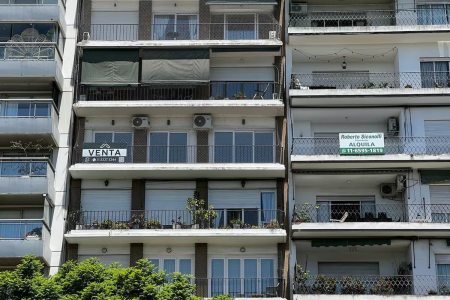
The sector was able to emerge from macroeconomic stagnation, but now faces the challenge of normalizing its relative prices.Daniel Basualdo
“The biggest disappointment of the last two years has been the price of used properties, and for me, that largely determines all the major problems the real estate sector is experiencing ,” said economist Federico González Rouco during the Converge Construction Forum, held at the Rosario Stock Exchange.
González Rouco's words set the tone for the event, where economists and developers agreed on a clear diagnosis : the sector was able to emerge from macroeconomic stagnation, but now faces the challenge of normalizing its relative prices in a scenario of dollar costs that are not expected to decrease.
But why is this? The economist argued that despite changes in the political and economic context, the market maintains structural problems that prevent a definitive takeoff of activity .
Moreover, “the value per square meter of used real estate is lagging behind by approximately 27% ,” stated the economist from the consulting firm Empiria. According to his estimates, when compared to variables such as construction costs , salaries in dollars, and other investment alternatives, the current price has fallen behind.
This mismatch, he explained, is not minor, but has direct effects on the functioning of the market : it discourages sales because owners do not accept lower prices; there are fewer transactions because property turnover is slowed; it impacts development, since without higher starting prices, the numbers for new projects do not add up.
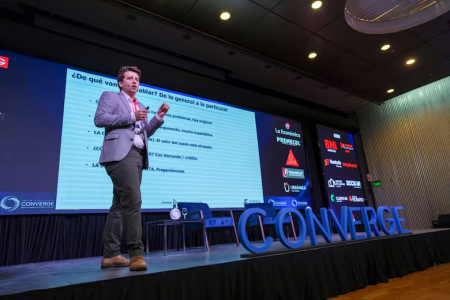
Federico González Rouco said that the market continues to have structural problems that prevent a definitive takeoff of activityGentleness
The result is a market that appears active but is actually structurally stalled . "The price of used cars ends up dictating the rest of the market," he summarized.
Meanwhile, mortgage lending , although recovering, still represents a minimal portion of total transactions in the country . The expert emphasized that, unlike other countries where financing covers a large part of the purchase price, in Argentina, buyers with credit constitute an exceptional minority .
Used vs. new construction: the main gap today
While the used property market lagged behind —down 27% —construction costs followed the opposite trend . After currency stabilization, the economy left behind a period of artificially low costs in dollar terms and entered a stage of dollar-denominated inflation .This is where the main distortion in the sector appears: high construction costs and used car prices that do not keep pace with this increase .
From the developers' perspective, this phenomenon has concrete consequences: the gap directly impacts profitability . Many projects that were initially planned with significantly lower costs ended up facing cost structures that rose between 40% and 70% in dollar terms.
Moreover, Alan Mohadeb, director of the developer Grupo Portland, explained that many projects that had been planned with costs close to US$1100/m² ended up being executed above US$1800/m².
" Margins were squeezed to the limit and, in many cases, simply disappeared," other developers agreed.
The businessman stressed that 80% of the four million square meters under construction in the city of Buenos Aires correspond to small projects , whose managers did not foresee the escalation of real costs.
The developers who joined Mohadeb on the panel—Lucas Salim, from Grupo Proaco, and María José Correa, from Torre Puerto—agreed that the transition from emergency management to efficiency management marks a new stage in the business . “The challenge lies in the ability to adapt in a market historically lacking credit,” said Salim.
The historical lack of credit forced companies to create their own financing vehicles , although all admit that the return of bank loans is the only path to massive scale.
For his part, Correa proposed a change of model: less pre-sale and more participation of institutional capital , with a focus on developments oriented towards income and cash flow generation.

A panel brought together developers from different parts of the country: Buenos Aires, Córdoba and Santa Fe. Gentleness
But in addition to the aforementioned cost pressures, Mohadeb emphasized that land prices remain high , with rates not decreasing in certain established areas of Buenos Aires, where in many cases they don't fall below US$800/m² . The problem is that this value hasn't adjusted to the new cost and price context.
“The landowner continues to expect another cycle,” he commented, referring to values that reflect a previous market, with lower costs and greater liquidity.
That's why many developers started looking outside the traditional corridors , where costs can be below US$200/m², such as Vaca Muerta in Neuquén, "which allows for recovering margins even with similar construction costs."
Expensive construction or standardization process?
In that context, another interpretation emerged. In macroeconomic terms, for economist Esteban Domecq of Invecq Consulting, construction is not expensive, but rather is normalizing after a period in which costs had fallen to historic lows due to a distorted exchange rate.The expert believes that the sector has left behind that stage of artificially low costs to position itself in the middle of the table , where labor remains affordable, but materials reflect the international inflation of inputs such as steel and aluminum.
“ The problem isn’t the level, but the speed of the adjustment ,” he explained. According to his analysis, costs in dollars rose faster than the capacity of demand to react , which led to a slowdown in activity . “We were coming from a dollar that was practically nonexistent, which put costs at historic lows for the last 60 years,” he explained.
In this context, Domecq provided data explaining why the sector continues to struggle despite the changing macroeconomic climate. He detailed that construction activity is still around 17% below 2022 levels , reflecting that the recovery has not yet taken hold.
The decline is even more pronounced in public works , where the fiscal adjustment had a major impact and today it is about 75% below its previous levels , leaving the activity practically without one of its historical drivers.
But Domecq added a key piece of information: the contraction isn't solely due to a lack of new construction, but also to the lingering effects of a previous period of material overstocking . During the months of greatest macroeconomic uncertainty, many companies had stockpiled supplies, allowing them to continue ongoing projects even as material deliveries plummeted. " That buffer has now run out , and the decline is more clearly reflected in actual activity," he explained.
Even so, the economist suggested that the sector has potential for recovery under the new economic framework . In a context of stability, lower inflation, and the reappearance of credit, construction could become one of the main drivers of growth. However, this will not be immediate: Domecq estimated that the normalization process could take between three and five years , in line with the need to rebuild demand, financing, and investment levels.

Esteban Domecq offered a more macroeconomic perspective. Gentleness
From a financial perspective, analyst Claudio Zuchovicki argued that whether the market is expensive or cheap depends largely on expectations about the economic future. "It depends on what the country promises going forward ," he stated.
The expert maintained that construction is the activity that generates the most employment , highlighting that its impact on labor is greater than that of other economic sectors. He argued that the return on mortgage loans functions as a tool of “social justice ,” since it allows people who do not have the full capital upfront to access housing.
In that sense, he considered UVA-indexed loans , in the current context, to be a viable alternative once again . With property values relatively low in historical terms, the equation, in his view, tends to balance out in stable scenarios: if the economy improves, the asset appreciates; if there is a correction, the debt adjusts in real terms.
Economist González Rouco emphasized that the demand for homeownership is practically limitless , given that four out of ten young people live with their parents because their income is insufficient to rent or buy. However, this demand doesn't translate into sales due to a lack of credit and a market that still operates like a "small fishbowl ," limited to those with cash on hand.
Opportunity or concern?
The 27% lag in the value of the square meter used , according to González Rouco's estimate, leaves the sector facing a dilemma.On the one hand, it can be interpreted as an entry opportunity due to the "cheap" prices . But on the other hand, it also serves as a warning sign: it reflects a market that has not yet found an equilibrium price that satisfies both the supply of new construction and the demand for used properties.
This tension between rising construction costs and a struggling used-home market is at the heart of the current difficulties . Analysts believe the solution lies in ensuring that bank financing conditions not only become available but also remain stable over time, avoiding the drastic fluctuations that have characterized the history of mortgage lending in the country.
The meeting was attended by the city's mayor, Pablo Javkin , along with authorities from the province of Santa Fe. Analysts, economists, and industry leaders analyzed the macroeconomic context and outlook, sharing experiences, trends, and specific cases .
The exhibitors agreed that 2026 could mark the beginning of a more robust phase . However, as long as used property prices remain stagnant, mortgage lending stagnates, and construction costs remain high, the market will remain stuck .
www.buysellba.com