

BuySellBA
Administrator
Property deeds in Buenos Aires Province: March marked the best level in 8 years and reversed the weak start of 2026 - La Nacion Propiedades

Source:

Escrituras en Provincia de Buenos Aires: marzo marcó el mejor nivel en 8 años y revirtió el débil inicio de 2026
Con 11.116 operaciones, el tercer mes del año mostró un repunte. Qué factores explican la mejora, qué viviendas se venden y el crédito hipotecario.
 www.ambito.com
April 22, 2026
By Jose Luis Cieri
With 11,116 transactions, the third month of the year showed an upturn. What factors explain the improvement, what types of homes are being sold, and what about mortgage lending?
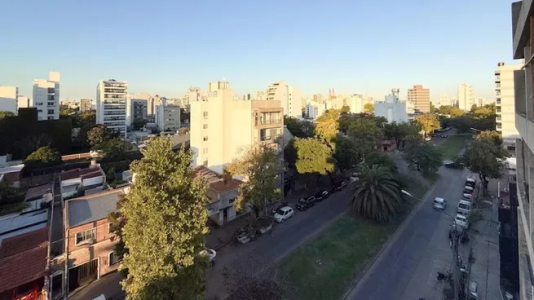
View of 19th Avenue between 42nd and 43rd Streets, near Azcuénaga Square, in a growing area of La Plata
The real estate market in Buenos Aires province showed a turning point in March after a weak start to the year. With 11,116 deeds registered, activity saw an 8% year-on-year increase and a 45% jump compared to February, when 7,655 transactions were completed.
The figure not only reflected a temporary improvement, but also positioned March as the best performance for that month in the last eight years. The closest precedent was in March 2018, with 11,954 deeds , in a different economic context and with a different level of credit and prices
The rebound was supported by several factors. Exchange rate stability, the absence of sharp fluctuations in the dollar, and relatively contained published prices facilitated the closing of transactions. Added to this was pent-up demand that began to emerge in the face of a more predictable environment.
Guillermo Longhi , president of the Notaries Association of the Province of Buenos Aires, noted that the first quarter's performance was uneven and did not yet allow for a clear trend to be established for the year. He indicated that the improvement in March was due to multiple factors, including prices that did not skyrocket, a sustained housing demand, and the impact of a relatively stable dollar on decision-making.
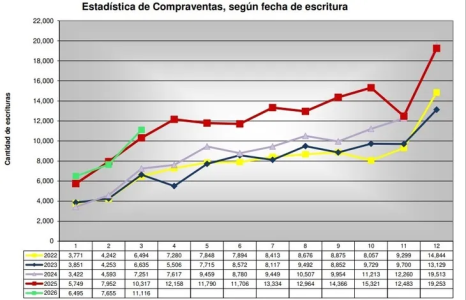
Source: College of Notaries of the Province of Buenos Aires
The executive emphasized that the exchange rate continued to be a key factor in market dynamics. He explained that exchange rate stability created conditions for moving forward with operations that had been on hold for months.
Credit leverage is vital but it must grow
However, mortgage lending did not follow suit with the same intensity. In March, 1,509 mortgages were signed, a 10% year-on-year decrease, although a 44% increase compared to February. The monthly improvement aligned with the overall rebound, but failed to establish itself as a structural driver of growth.Longhi warned that without further development of financing, the recovery will reach its limits. He pointed out that credit is crucial for expanding the buyer base and sustaining growth over time.
Prices are reasonable and transactions are possible.
Meanwhile, property values remained stable. Data from Mercado Libre and the University of San Andrés showed moderate variations in March for both houses and apartments, with slight increases in the north and mixed performance in the south and west. Year-on-year increases are approaching 3%, with almost no month-on-month increases.This solidified a scenario where the price-quality ratio became the determining factor. In this context, buyers avoided accepting inflated prices and prioritized concrete opportunities.
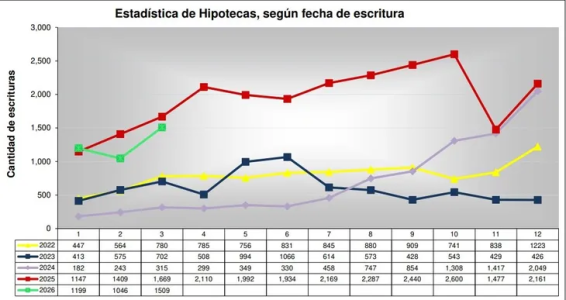
Source: College of Notaries of the Province of Buenos Aires
In practice, the market operated on mid-range prices. Apartments and compact houses concentrated the demand, with transactions that in many cases were around US$100,000, especially in consolidated urban areas of Greater Buenos Aires.
In the west, for example, prices fluctuated widely, although closing effectively at mid-range levels. In the south, prices remained accessible, within the market average, with a strong presence of one- and two-bedroom units.
Below are the price ranges of the best-selling properties, according to various industry portals:
- Northern zone of Greater Buenos Aires (GBA)
- Used apartments: between US$100,000 and US$250,000.
- Brand new apartments: from US$180,000, with peaks depending on location and quality.
- Prices per m2: between US$2,500 and US$4,500.
- Most frequent transactions: above US$130,000, depending on the broker and type.
- Greater Buenos Aires West Zone
- Apartments: between US$60,000 and US$220,000.
- Houses: between US$120,000 and US$250,000.
- Most frequent transactions: around au$100,000.
- Southern Greater Buenos Aires area
- One-bedroom apartments: between US$45,000 and US$80,000.
- 2-bedroom apartments: between US$70,000 and US$120,000.
- 2-bedroom houses: between US$80,000 and US$150,000.
- 3-bedroom houses: between US$120,000 and US$250,000.
What was sold and why
The type of property also explains the surge. Two-bedroom houses, with and without garages, functional apartments, and well-located units led the demand. These properties combined affordability, good location, and conditions suited to current needs.Matías Bettatis , president of Bettatis Real Estate Advisors, analyzed the phenomenon from a structural perspective. He pointed out that the growth in March was due more to a boost in confidence than to a fundamental change in the market.
He explained that the improvement was linked to the activation of pent-up demand rather than a boost in credit. He indicated that, in contexts of greater macroeconomic predictability, with less volatility and more stable interest rates, decisions that had been on hold for years began to emerge.
Bettatis noted that "mortgage lending maintained a low incidence within the total number of deeds. The volume was sustained mainly by cash transactions, chain sales, and asset reorganization processes."
He also noted that the values of existing properties remained between 25% and 30% below the peaks of the previous cycle. This situation created concrete opportunities for buyers with available cash, although demand became increasingly selective.
According to their perspective, the transactions involved properties that met three conditions: a suitable price, a well-established location, and functionality. Factors such as natural light, layout, and the presence of outdoor spaces directly influenced the decision.
A market with structural limits
Luis Colao , president of the College of Auctioneers and Real Estate Brokers of the Province of Buenos Aires, stated that the improvement was not due to a structural policy but rather to specific factors. He indicated that credit was available to some extent, but far from what was expected, and that transactions were mainly based on prior savings and investment decisions made in response to low prices.Colao maintained that the market is operating at depressed values. He explained that properties have remained well below 2017-2018 levels, with declines in some cases reaching 40%. "This scenario encourages buying, but it also raises questions about the future," he commented.
He warned that the market did not validate current construction costs, creating a gap between replacement value and selling prices. He noted that once the available stock is absorbed, a supply problem could arise.
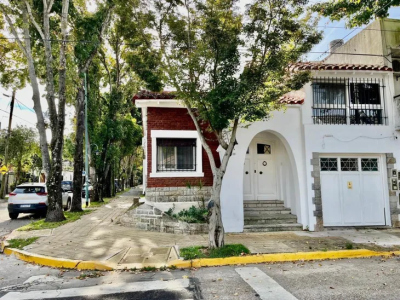
Mariano Moreno at 1200, in La Lucila, Vicente López district, one of the points with the highest number of transactions in the province
Regarding credit, he highlighted two key limitations: the financial cost and income level. He explained that interest rates and associated expenses made access difficult, while salaries limited eligibility.
Colao indicated that "this combination reduced the pool of potential buyers to segments with the ability to pay or access to savings, leaving the middle class out of the market in many cases." He pointed out that the aspirations of this segment found no response in either the credit options available or the available property values.
It also presented difficulties in land development, linked to the high cost of services and the conditions imposed by the service providers. This factor limited the expansion of the land market and restricted new investments.
What can happen
Looking ahead, the real estate market in the province shows signs of a gradual recovery, conditioned by macroeconomic stability and the evolution of credit.The development of mortgage lending emerged as the main challenge, not only in terms of interest rates, but also in terms of access, costs, and the ability to include new buyers.
Bettatis concluded that the market has already begun to move, "but the difference between a recovery and an expansion will depend on the system's ability to provide financing and maintain stable conditions that allow demand to be transformed into effective transactions."
www.buysellba.com