

BuySellBA
Administrator
"Price Drop" signs are back: what's happening with used properties in Buenos Aires? - Ambito Financiero

Source:

Vuelven los carteles de “bajó su precio”: qué está pasando con los usados en CABA
Las propiedades usadas registran mayores correcciones de precio en un mercado con sobreoferta. En este contexto, surge la pregunta clave: ¿conviene comprar ahora o esperar?
 www.ambito.com
April 15, 2026
By Jose Luis Cieri
Used properties are experiencing the greatest price corrections in an oversupplied market. In this context, the key question arises: is it better to buy now or wait?

Increased supply and negotiation are key features of the current market. The true value of properties necessitates accepting appraisals that demand can validate in order to sell quickly.
The used car market in Buenos Aires is showing a shift in dynamics. Supply is increasing again, and "price reduced" signs are making a strong comeback, in a scenario where prices are no longer rising and negotiation between buyers and sellers is gaining ground.
In this context, the stock of apartments for sale is once again approaching 80,000 units. Industry experts interpret this as many owners perceiving a window of opportunity and deciding to enter the market to try and close deals. This volume is added to the rest of the supply—houses, townhouses, and other properties—bringing the total to over 110,000 listed properties.
Santiago Magnin , founder of Deinmobiliarios and a real estate specialist, points to a turning point. “For the first time in several years, supply is increasing while demand is decreasing.” The total stock exceeds 110,000 properties, with growth of around 5% to 10%, while the number of transactions is falling by about 20% year-on-year.
That combination is starting to affect prices. “The two factors combined cause closing prices to fall, and that may or may not indicate that list prices will fall, but yes, they are now falling a little,” Magnin added.
More supply, the factors
The increase in supply is due to several factors. Owners who postponed decisions for years are returning to the market, while more cautious demand is slowing down the absorption rate.Fabián Achával , CEO of Fabián Achával Propiedades, stated that the origin lies in the changing economic context. “At the beginning of the year, we saw a stabilization of prices, with supply now 86% higher than during the Macri era.” The previous growth was largely sustained by the boost in mortgage lending, which subsequently lost momentum.
Without that leverage, the market changes its logic. Achával elaborated: “Demand without mortgage credit places much more emphasis on price negotiation.” Added to this is the wage factor, which limits the ability to accept price increases.
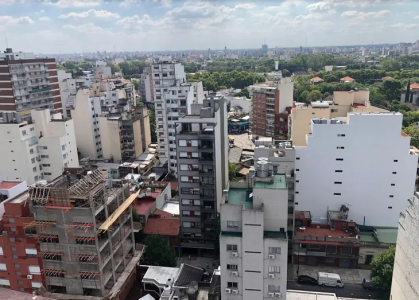
Nearly 80,000 apartments are back on the market in Buenos Aires, what are the reasons? (Photo Courtesy: San Román Propiedades)
Magnin focuses on that point: “The main driver of prices is the dollar-denominated wages of the middle class. If that doesn't improve, it's difficult to sustain price increases in the short term.”
The buyer changes their behavior
Demand doesn't disappear, but it does change its behavior. The decision-making process becomes more analytical and less impulsive, focusing on the true closing value.Jimena Maderna , head of Maderna Real Estate, explained the situation: “The market isn't in decline; it's in a phase of reorganization and readjustment.” The adjustments seen on real estate websites are not widespread, but rather selective.
“Properties that were taken off the market adjust between 3% and 8% to regain their market position,” he explained. The key lies in the gap between the listed price and the closing price. “Today, transactions are finalized between 4% and 6% below the listed price. That difference defines the real value,” he added.
In that context, the oversupply quickly exposes undervalued units. "The buyer doesn't validate expectations, they validate the price," Maderna explained.
Zones and prices: three speeds
The market is not behaving uniformly. There are areas with greater dynamism, others with weakness, and a third group that manages to maintain its value.Maderna identifies three scenarios. On one hand, areas with lower income values are registering moderate increases, around 1% to 2% per month. On the other hand, areas with lower demand are experiencing declines of up to 5% annually and require more aggressive adjustments to close deals.

Buyers prioritize price and conditions in a more selective scenario
Meanwhile, the more established sectors are maintaining prices, albeit with greater demands for quality and commercial strategy. Magnin offers another perspective: “There are neighborhoods where there is simply no price reference because there are very few transactions.”
The role of mortgage credit and banks
Credit is once again taking center stage in market dynamics. Its contraction explains much of the current slowdown.Magnin provided a relevant piece of information: "Today we have much less mortgage credit than last year and that generates less demand because each loan generates between two and three linked transactions."
Even so, a nascent change is emerging. “We’re starting to see competition among banks to attract clients, something that didn’t happen years ago,” he explained. If this trend solidifies, the impact could be seen in the medium term. “First, credit has to become available, then demand increases, and only then do prices move,” he continued.
Achával agrees with the diagnosis. He added a perspective on the credit landscape. “The return of credit is key to having a year as dynamic as 2025, but it will be gradual and will depend largely on the dynamics of inflation and the decrease in country risk. The recent reduction in reserve requirements by the Central Bank and in interest rates are steps in the right direction,” he said.
Maderna summarized the effect: “Credit not only drives transactions, it organizes the market. Without credit there is a market, but it is slower and more negotiated.”
Closing values and current references
In the current scenario, the real price is determined by the closing price, not the published price. Negotiation becomes a structural part of the process.The ranges of operations reflect this logic according to various websites consulted:
- Studio apartments: US$55,000 to US$100,000.
- One bedroom: US$80,000 to US$140,000.
- Two bedrooms: US$120,000 to US$210,000.
- Three bedrooms: US$180,000 to US$280,000.
- Studio apartments: US$69,500.
- One bedrooms: US$79,500.
- Two bedrooms: US$112,250.
- Four rooms: US$152,500.
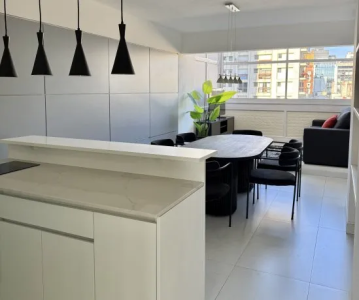
With less mortgage credit available and more inventory, published prices are starting to adjust.
The behavior of the m2
The data from Real Estate Report shows a market with greater stability in values per m2, after several years of corrections.
- Studio apartments: US$2,167 per m2.
- One bedroom: US$1,969 per m2.
- Two bedrooms: US$1,807 per m2.
- Three bedrooms: US$1,809 per m2.
This behavior confirms the change in phase. Less euphoria, more rationality, and greater weight given to macroeconomic variables in decision-making.
A more selective market
Increased supply, decreased demand, and declining credit create a scenario where selectivity reigns supreme. Negotiation space expands, and accurate information becomes increasingly valuable.Achával argued that the market needed to absorb the surplus to regain momentum. Magnin cautioned about the weight of real income on purchasing power. Maderna focused on the coherence between price and value.
Overall, the market shows signs of readjustment. "Price dropped" signs are no longer an exception but have become part of the new equilibrium.
Maderna concluded that the key today is not to wait for increases, but to interpret the real value of each property: "Today the market validates price, not expectation."
www.buysellba.com