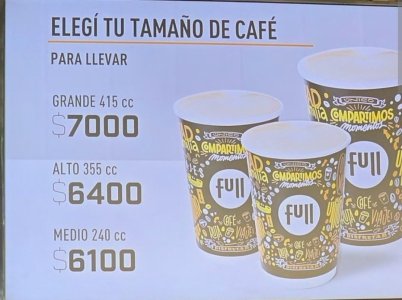
A question for all you. I came back to Argentina and my friend in Buenos Aires ask me to fill suitcase with coffee. He show me price of coffee in Argentina. Why so expensive there? Coffee prices on international market fall from $440 in October 2025 to about $285 per quintal now. But my friend say coffee so expensive there. Why this happen?
Coffee prices here drive me nuts. So expensive. In the typical place in Soho or Hollywood you will pay as much or more than NYC or Seattle or Miami.
And the coffee in the grocery stores here are dogshit and expensive. When you grab those purple bricks of Cabrales at Coto, you aren't just paying for roasted beans. You are paying for the infamous "Argentine Cost". This is a term locals use to describe the massive web of hidden expenses required to operate a business and move goods inside the country.
@CXA here there are a lot of extra costs. They don't make coffee here and it's 100% imported and 100% taxed.
Unlike your Ribeye, which is produced right here in the Pampas, Argentina does not grow commercial coffee. Every single bean has to cross an international border. Even though the government is slowly opening up trade, those beans are still slapped with import tariffs, customs fees, and administrative costs before they even leave the port of Buenos Aires.
Argentina has one of the most punishing corporate tax structures in the world, specifically because of a provincial tax called
Ingresos Brutos (Gross Receipts Tax).
- The importer pays a tax to bring the beans in.
- They sell to Cabrales, and pay a tax.
- Cabrales roasts and packages it, sells it to the supermarket, and pays a tax.
- Coto puts it on the shelf, charges you the 21% IVA (Value Added Tax), and pays another tax. Because this tax cascades at every single step of the supply chain, a massive chunk of that cost is going straight to the government, not the coffee grower.
Logistics in Argentina are crazy expensive. The trucking unions have a virtual monopoly on freight. Moving a container of raw coffee beans from the port to a roasting facility, and then distributing the finished vacuum-sealed packages to supermarkets across the country, costs a fortune in freight fees, toll costs, and required transit insurance.
You aren't just importing coffee; the materials needed to keep it fresh are often imported, too. The specialized aluminum foil, the plastics, and the high-end industrial machinery required to roast and vacuum-seal that specific coffee are all subject to the exact same import friction, taxes, and high domestic utility costs.
Ultimately, the global price of Arabica is just a tiny fraction of the equation. You are paying a premium to drag that coffee through the Argentine bureaucratic and logistical gauntlet. It is a nightmare! My friend owns a coffee shop and when I bust his balls about how expensive it is I have to him explaining all of this to me.