

BuySellBA
Administrator
Warning: How to spot a real estate scam before signing the contract - La Nacion Propiedades

Source:

Alerta: cómo detectar una estafa inmobiliaria antes de firmar el boleto
Falta de información o de documentación y “técnicas” de presión son señales claras de peligro ante una operación de compraventa inmobiliaria que puede resultar en un fraude
 www.lanacion.com.ar
April 21, 2026
Lack of information or documentation and pressure tactics are clear warning signs in a real estate transaction that could result in fraud.

Buying a house can involve legal or financial risks that every buyer should consider before closing the deal. Shutterstock
In a market where legitimate transactions and serious developments coexist with opportunists seeking to exploit buyers' haste or lack of information, prevention becomes an essential tool. Most real estate scams share a common pattern: incomplete information, dubious documentation, artificial urgency, and promises that seem too good to be true. Identifying them early requires not intuition but method, verification, and a healthy dose of professional skepticism.
Warning signs to heed
Documentation
The first red flag usually appears in the documentation . A seller who can't prove ownership, who delays delivering the deed, or who offers excuses for not showing the property title report is an immediate risk. In Argentina, any buyer can request a property title report from the Property Registry to verify if the property has any liens, encumbrances, or simply if it belongs to the person claiming to be the owner. When the alleged owner avoids this step or proposes to "proceed anyway," the transaction is already tainted. The same applies to properties in probate : these transactions are possible, but they require clear documentation, a declaration of heirs, and a professional to certify each step.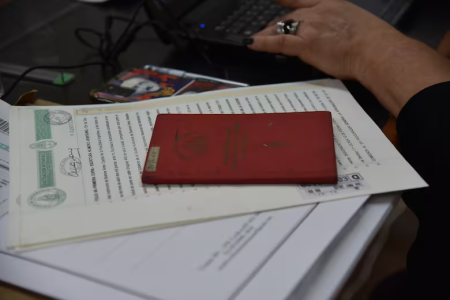
Having the documentation in order is key and should be reviewed by a notary.College of Notaries of the City of Buenos Aires
Intermediation
Another red flag is the intermediation process . Licensed real estate agencies must be registered and listed with the professional associations in their respective jurisdictions. An agent who cannot prove registration, operates solely through social media, or avoids signing a brokerage contract is breaking the law. In many cases, scams are perpetrated using profiles that impersonate real estate agencies , replicate photos from other listings, and request advance payments to "reserve" the property. Verification is simple: look up the registration number, check the business address, call the professional association, and confirm that the firm exists. A licensed broker will never pressure clients for money without supporting documentation.Urgency
Urgency is another classic tactic. “There’s another buyer,” “If you don’t sign today , the opportunity will fall through,” “The owner needs to close now.” These phrases aim to create emotional pressure so the buyer doesn’t check anything. Legitimate transactions may have deadlines, but they are never based on extreme haste. A purchase agreement is a complex contract that defines the price, terms, possession, penalties, and payment conditions. No one in a serious position expects it to be signed without reading it, without legal advice, and without verifying every detail. When urgency replaces transparency, fraud is imminent.Pre-sale or well
Properties under construction or in pre-sale require additional analysis. Here, the risk is not only documentary but also structural: developers with no track record, trusts without regulations, construction without municipal permits, or projects being sold before approval. Therefore, the buyer must review the building permit, the trust agreement, the developer's tax identification number (CUIT), and their delivery history. It is also crucial to verify that payments are deposited into accounts linked to the trust and not into personal accounts. A lack of financial traceability is a clear red flag.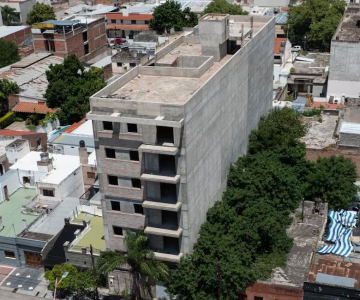
The risk of buying off-plan in a project that is "weak" in terms of paperwork or financing and where construction stops.Information from the Estuary
The price
The price also speaks volumes. A property offered well below market value isn't a miracle opportunity; it's a red flag. Scammers often use attractive prices to lure in potential buyers and then demand upfront payments to "secure the deal." In the real market, prices can be negotiated, but they never plummet without reason. Comparing prices in the area, reviewing similar listings, and consulting an independent appraiser helps to spot inconsistencies.Handing over money without legal backing
Finally, the most important rule: never hand over money without legal backing . Every deposit, reservation, or advance payment must be documented in writing, with complete information about the seller, the property, and the agreed-upon terms. An informal receipt, a WhatsApp message, or a transfer without a contract offers no protection to the buyer. The purchase agreement is the instrument that formalizes the transaction, but even before reaching that stage, every action must be recorded. In a market where appearances can be deceiving, verification is the only real defense.www.buysellba.com