

BuySellBA
Administrator
The reasons why more apartments are built in Buenos Aires than there are people to live in them - La Nacion Propiedades

Source:

Las razones por las que en CABA se construyen más departamentos que la cantidad de gente que hay para habitarlos
El 13,8% de las viviendas de la Ciudad están deshabitadas, más del doble del nivel considerado técnicamente saludable
 www.lanacion.com.ar
April 25, 2026
13.8% of the city's homes are unoccupied, more than double the level considered technically healthy.
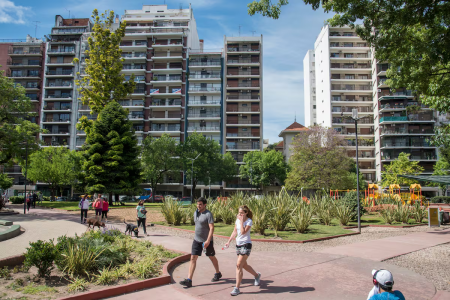
While the housing supply increased by 15% from 2010 to 2022, the number of inhabitants only rose by 6.7% in the same period, according to a report by TerresAgency V
More housing is being built in Buenos Aires than ever before, but the population isn't growing. While the housing supply increased by 15% from 2010 to 2022 , the number of inhabitants only rose by 6.7% in the same period, according to a report by Terres, a real estate platform specializing in land.
The data encapsulates an increasingly evident contradiction. Although construction in the city hasn't stopped, demographically there's a stagnation . The report summarizes the paradox in one sentence: the problem isn't scarcity, but misalignment .
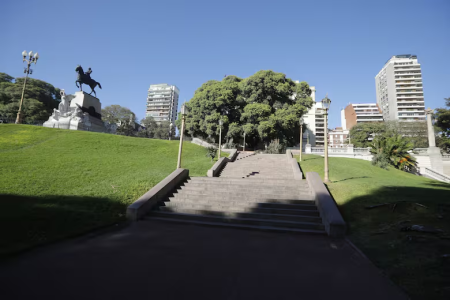
13.8% of the city's homes are unoccupied, more than double the level considered technically healthy.Ricardo Pristupluk - La Nacion
This gap is reflected in a striking indicator : 13.8% of the city's homes are uninhabited , more than double the level considered technically healthy (between 5% and 6%).
Why are there more houses but not more people?
The phenomenon, which involves increased construction, is due to a combination of four structural factors that have been consolidating for decades.1. Demolition and reconstruction
Many new constructions don't add residents; instead, they represent a stylistic replacement without an increase in population density . Old buildings are demolished to make way for more modern units, often consisting of studios or apartments geared toward investment.According to data compiled by Daniel Bryn, real estate market analyst at Zipcode, 48% of the plots in the City of Buenos Aires are over 80 years old, and there are even neighborhoods where these numbers are higher:
- San Telmo: 79%
- Withdrawal: 72%
- San Nicolás: 70%
2. Increasingly smaller households
The average household size in Buenos Aires has fallen from 4.5 people in the mid-20th century to 2.6 today, according to data from the latest census in 2022. This means that more housing is needed to accommodate the same population.This creates a demand for different housing types : more units but smaller homes. “A significant portion of new construction does not generate new residents: it compensates for the fragmentation of those already living there,” the study summarizes.
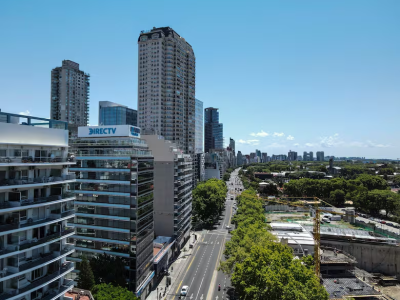
The average household size in Buenos Aires has fallen from 4.5 people in the mid-20th century to 2.6 today.Ricardo Pristupluk
3. More income, more square meters
In higher-income sectors, the demand for square meters per capita is constantly increasing . This drives construction, but not necessarily population growth.“Part of the new stock corresponds to households with greater purchasing power that consume more surface area per person; more square meters are produced per inhabitant, but there are no more inhabitants,” explains Joaquín Tomé, director of the Center for Urban Economic Studies (CEEU) of UNSAM.
4. Real estate as financial assets
The real estate market also serves a financial function: construction and purchases are not always for living in, but are often used as a store of value or investment . This partly explains the increase in vacant units.The map of inequality
Although the city's population remains stable, the trend is not uniform across neighborhoods . " In technical terms, Buenos Aires could grow. In real urban terms, it can't grow equally everywhere ," agrees Federico Poore, an urban consultant.Some areas are experiencing sustained growth. In Commune 13 ( Belgrano, Colegiales, and Núñez ) , the population grew by 14.6% between 2010 and 2022. Villa Urquiza and Caballito also grew , registering an 18% increase . Similarly, Commune 8 ( Villa Soldati, Villa Riachuelo, and Villa Lugano ) saw a 9.4 % increase.
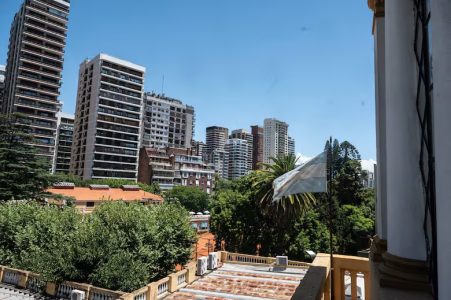
In Belgrano, Colegiales and Núñez, the population grew by 14.6% between 2010 and 2022Tadeo Bourbon
In contrast, other neighborhoods lost residents even while gaining housing. One such case is Commune 7 (Flores and Parque Chacabuco), which lost 3,759 residents and gained 12,400 housing units.
The dynamics are also related to urban quality . Neighborhoods like Palermo, Belgrano, and Recoleta, with better access to services, green spaces, and infrastructure, exhibit higher levels of densification . In contrast, areas like Villa Lugano, Mataderos, and Liniers show less relative development. “Growth isn’t just physical: it’s also aspirational , ” Bryn points out.
In this regard, Micaela Alcalde, an architect, urban planner, and urban and real estate consultant, explains that there are areas that are not "validating the development market despite having the potential for more supply." This is possibly due to the quality of services, such as schools and green spaces.
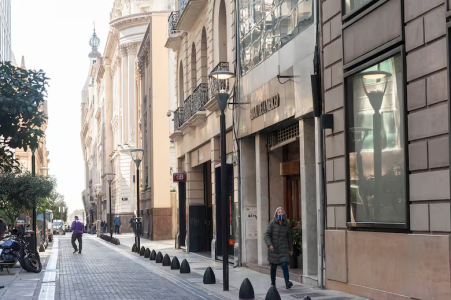
The city center of Buenos Aires has excellent connectivity and a well-established infrastructure, but it fails to attract a resident population.PATRICIO PIDAL/AFV
The city that should be being built
Demographic data helps identify the type of property that the population needs:- 35.7% of households in Buenos Aires are single-person households
- 40% have no children
- 23% of the population is over 60 years old
In a context without long-term mortgage financing, the buyer ceases to be the average family and becomes the investor with liquidity, says the specialist.
Despite this scenario and the difficulties it entails, specialists agree that the city's actual population capacity is between four and five million inhabitants .
To move in that direction, they identify three key conditions:
- Access to credit and the role of the State: promoting access to housing for the middle class and for sectors that are currently excluded from the market.
- Balanced territorial development: the city has “underutilized” infrastructure that would allow it to accommodate more people. The proximity model aims to encourage people to live within the city—closer to work and services—rather than in the suburbs, which involve greater distances and higher infrastructure and transportation costs. “Under this approach, density is not a problem but a tool ,” explains Bellocchio.
- New housing typologies: moving away from the "studio apartment for investment" model and building what real families demand, that is, apartments with terraces or intermediate typologies like penthouses. "If most development focuses on small units as investment, the city may grow in buildings, but not necessarily in inhabitants," adds Bryn.
Downtown: the exception to the rule
The downtown area of Buenos Aires deserves separate analysis. Despite having excellent connectivity and well-established infrastructure, it fails to attract a permanent resident population.For Poore, the explanation lies in the lack of specific public policies: “ Leaving the private sector as the sole engine of development deepens inequalities. Incentives for private entities are insufficient to revitalize depressed areas.”
In short, growth in the housing supply does not guarantee population growth . “The real point is understanding what combination of transformation, rules of the game, and access conditions could change that,” Terres concludes.
www.buysellba.com