

BuySellBA
Administrator
Hereditary rule: The phenomenon that is growing among young people over 25 who cannot buy or rent their first home - La Nacion Propiedades

Source:

Herenciocracia: el fenómeno que crece entre jóvenes exitosos +25 que no logran comprar ni alquilar
Herenciocracia: el fenómeno que crece entre jóvenes exitosos +25 que no logran comprar ni alquilar
 www.lanacion.com.ar
April 09, 2026
By Candela Contreras
They prefer to spend money on specialty coffee, avocado toast, or trips abroad rather than save for their own home.” Phrases like this are often heard regarding the reasons why young people today can't even afford rent. But the data is beginning to disprove this idea. In Argentina, access to housing has become so restrictive that becoming independent is no longer a matter of individual choice. The path to adulthood—finishing your studies, getting a job, renting, and eventually buying a home—is proving impassable. By 2025,The number of tenant households in the country fell from 21.7% to 20.4%, which is 158,000 fewer than the previous year.According to data from Indec (the National Institute of Statistics and Censuses), the proportion of renters has fallen in a context where accessing homeownership remains difficult and the rental market has grown exponentially since the repeal of the rental law at the end of 2023. “The drop in renters could have several explanations. The most optimistic is mortgage lending, but the numbers don't support that being the main factor,” warns economist Federico González Rouco of Empiria Consultores. As the housing specialist explains, a large part of those who currently access bank financing are homeowners upgrading to better housing. This data, then, raises a deeper question:If there are fewer tenants, but not more landlords, what's going on?The answer emerges when this information is cross-referenced with another phenomenon: the difficulty young people face in becoming independent. According to a reportfrom the Urban Fabric Foundation,4 out of 10 citizens between the ages of 25 and 35 fail to become independent.This represents more than 1.8 million individuals who continue to live with family members, or 38.3% of those in that age group. “When you cross-reference the data on renters with the data on people leaving the parental home, they appear to be highly correlated. It's not that there are fewer renters because there are more homeowners, but because fewer people are managing to become independent,” González Rouco points out.
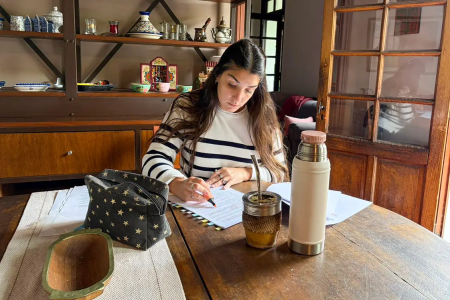
In the family home for almost 30 years.“Becoming independent would lower my quality of life because I wouldn’t be able to cover the rest of my needs,” says Lucía Colombo
Rocío is 27 and left her parents' house less than a year ago, but under exceptional circumstances. "An acquaintance rented me a place at a low price, and I moved in with a friend," she says. She admits that she couldn't live alone any other way: "I'd have to choose between paying rent or eating." Lucía Colombo lives in Rosario, is 28, and can't even take that first step. "I'd love to move out on my own, I really want to, but I can't afford rent and living expenses," says this speech therapy student who works in the healthcare field. "Becoming independent would lower my quality of life because I wouldn't be able to cover my other basic needs. It's not that I don't want to, I just can't," she explains. For both of them, the impact goes beyond the financial.“It’s very hard to be almost 30 and still live with your parents. It takes away your independence, your adulthood, your power to make decisions.”“You feel the social pressure that at a certain age you should have already left, it feels terrible,” they agree. Pietro, 26, would also like to move out on his own, but his salary isn't enough. “I'm paying for university, so it's impossible right now,” he explains. According to his calculations, renting an apartment in an area where he'd like to live would cost him around $850,000 a month, more than 50% of his income.
Apartment rentals, neighborhood by neighborhood
Average price of a 1-bedroom apartment in CABA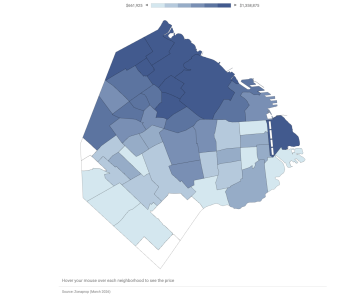
The barrier to entry
Soledad Balayan, owner of Maure Real Estate, sees this problem every day. “Salaries aren't enough to live on your own. It's becoming increasingly difficult to meet the requirements,” she explains. In the formal market, the entry barrier is clear: rent shouldn't exceed 25 or 30% of salary. In practice, fewer and fewer people can meet that condition. By 2025,57% of tenants spent more than half of their income on rent, despite the recommended 30% threshold, according to a survey. According to the Civil Association for Equality and Justice (ACIJ), in the city of Buenos Aires, for example, the average income for the population between 25 and 35 years old is $1,212,295, according to data from the third quarter of the Permanent Household Survey (EPH) of 2025, updated to March 2026 for inflation, compiled by González Rouco. The average rent for a one-bedroom apartment is $814,659, and for a studio apartment, $704,700. The numbers don't add up. "Very few people living alone can move into a studio apartment based solely on their income," Balayan points out. Therefore, demand patterns have also changed: "An alternative is to rent a one-bedroom apartment and share it." Pablo González, economist and CEO of Hoggax, a platform that provides rental guarantees, states that the problem lies in stagnant incomes and that this reality translates into new behaviors: contract terminations to move to more affordable options, increased delinquency in maintenance fees, and a phenomenon that until recently was marginal in Argentina: housing sharing. “Now, the limit is set by money,” he summarizes. The gap between salaries and access to housing is replicated throughout the country. When comparing the cost of a one-bedroom apartment with the average income, in many cases renting means allocating between 60% and more than 100% of the salary of those between 25 and 35 years old. There are extremes:In cities like Bariloche or Posadas, rent already exceeds the average income of a young person.Even in Rosario and Córdoba, the ratio remains above what is considered sustainable based on data collected from the EPH (Permanent Household Survey) and the Real Estate Report. According to Matías Araujo, a researcher at the Urban Fabric Foundation, there is a forced readjustment underway within the system.“The aspirational horizon has disappeared. If you know you won't be able to access housing in the short or medium term, you stop saving for that and spend on what is within your reach and what you can enjoy now.“Why save for something that’s completely out of reach?” she asks. Income is enough to cover daily expenses, but not enough to take the leap. “The barriers to entry for renting—like the deposit, the advance payment, moving costs, and furnishings—nowadays require family support,” Araujo adds. “What matters is your financial safety net,” González Rouco agrees, introducing a concept that addresses a growing phenomenon: “inheritance-based wealth.”
More family dependence and less inheritance
The term “hereditary rule” was popularized by British historian Eliza Filby to describea society in which opportunities, such as access to housing, depend less on one's own merit and more on family wealth.“It’s the opposite of meritocracy, of the belief that hard work will lead to success,” the author argues. “If access to housing depends more on family wealth than on individual income, the impact on social mobility is enormous,” González Rouco warns. The “parents’ bank” is what defines it. She explains that this phenomenon is linked to a broader process: the possibility for generations who experienced better economic conditions to accumulate wealth. “Those between 60 and 70 years old were able to accumulate capital in a much more favorable context. But they live longer, so that transfer is delayed.”That leaves millennials in the middle: without their own access and waiting for help or an inheritance that doesn't always arrive.”Describe. The result is an increasingly marked gap: on one side, those who can rely on their family to access housing; on the other, those whoThey are unable to make the leap, regardless of their effort or training.The market confirms this trend. “It’s common nowadays for young people to buy property with the help of their families. Parents prefer to leave their children real estate rather than money,” explains Martín Boquete, director of Toribio Achával.
In this way, “inheritance-based ownership” is no longer an abstract concept and becomes tangible in people's own stories. Bianca is 28 years old and acquired her home at 23. “It was a gift from my family. I couldn't have done it on my own. It's a privilege,” she acknowledges. She knows her case is far from representative. Ignacio, 30, shares a similar experience. He acquired his property through an inheritance from his parents. “I couldn't have done it alone. It's an advantage over my peers, because with my salary I couldn't afford rent, much less think about buying,” he explains. Iván, 27, also doesn't pay rent.She has lived in a family property since she was 25, a property that was given to her. “Not having to consider the cost of rent is a huge advantage,” she says. He admits. A similar case is that of Iñaki, 24, who came from the north of the country and lives in an apartment bought by his parents. “I couldn’t afford to rent on my own, let alone buy one.This opportunity takes a huge weight off my shoulders month after month and allows me to develop my career in Buenos Aires.”“We’re heading toward a society with less access to homeownership, more single-person households, and a higher proportion of seniors who will be renting,” says this young man who works as an employee. “The key is to overcome the barrier to mortgage lending. Without that, the system of inherited wealth will become increasingly entrenched,” he concludes.

Planning.Ramiro Andrada managed to buy his first apartment after years of saving and selling one of his most expensive guitars, but he was only able to leave his parents' house at 27.
When the opportunity arises
Beyond the current situation, planning is crucial. Ramiro Ángel Andrada is 30 years old and bought his apartment with a mortgage. He works at a bank and obtained financing in 2024 under terms that were accessible to him. He's a musician and chose to invest his savings in instruments: he bought guitars (mid-range and high-end) as a way to protect their value against financial volatility. When the opportunity arose, he sold one of his more expensive guitars and, adding it to his savings, gathered the initial capital to proceed with the purchase. “When I bought, property prices were lower than they are now. Everything fell into place, and it worked out well,” he recalls. “I always knew I had to be prepared for when the opportunity came along,” he adds. Even so, he acknowledges that his journey also had a key factor: time. “I left my parents' house at 27. Being able to stay until that age indirectly helped me save and invest,” he admits. Access to a first home opens new doors. To the differences that have always existed, we must now add the diverse paths within the same sector, the middle class. Inequality is becoming the norm. The problem is no longer achieving homeownership, but being left behind before even trying.www.buysellba.com