Explore, connect, thrive in
the expat community

Expat Life: Local Discoveries, Global Connections

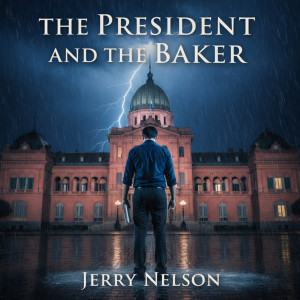
The Baker and the President (out this week)

Content Provider

Well-known member
president_and_the_baker_square.png
 

I wrote my own story.​


If anyone wants to buy me a coffee I will post my alias and you can buy me a coffee. 🙂

Chapter One: The Arithmetic of Ruin​

The rain in Buenos Aires did not wash things clean; it only made the decay heavier.

In La Boca, the summer thunderstorm battered the corrugated iron roofs of the conventillos, the water rushing down the painted walls and pooling in the cracked sidewalks. Pedro Villanueva stood in the center of his bakery, listening to the drumbeat of the storm. The air, which for forty years had smelled of yeast, toasted butter, and warm sugar, now smelled only of damp concrete and defeat.

He ran a calloused thumb over the glass of the main display case. It was perfectly empty. There were no medialunas, no alfajores, no crusty loaves of pan francés. To bake them required flour, and the price of flour had changed three times in the last forty-eight hours. The peso had become a ghost, a number that evaporated before it could be spent.

Behind him, the great industrial oven—the iron heart his father had installed in 1984—was stone cold.

Pedro walked to the cash register and pressed the release lever. The drawer slid open with a tired chime. Inside lay a few crumpled bills of one thousand pesos, featuring the face of San Martín, looking as exhausted as Pedro felt. It wasn't enough to buy a single sack of wheat. It wasn't enough to bring his wife, Elena, and his two children back from her sister's cramped apartment in Córdoba.

"Just a season, Pedro," Elena had said at the Retiro bus terminal, her eyes red, gripping the children's hands. "Just until the prices settle."

But nothing was settling. The ground was falling away.

He walked into the small back office. On the desk sat a battered, black-spined school notebook. This was the ledger. Not the official one for the tax authorities, but the real one. The one where Pedro had recorded the names of neighbors who needed bread on credit. The widow Rossi. The mechanic Gomez. The list of debts owed to him, and the mountain of debts he owed to the suppliers. The numbers told a story of a neighborhood slowly starving, of a business bleeding out one peso at a time.

Next to the ledger sat a heavy, snub-nosed .38 caliber revolver. It had belonged to his grandfather, kept in a lockbox for decades to ward off thieves that never came. Pedro picked it up. The metal was startlingly cold. He didn’t know how to check the cylinder. He didn’t even know if there were bullets in the box it came from. He shoved it into the deep pocket of his canvas jacket. It weighed him down, an anchor in the storm.

He picked up the black notebook and tucked it inside his coat, against his chest.

In the corner of the office, a small, static-filled television muttered to itself. The evening news was playing. The President of the Republic was seated at a polished mahogany desk, framed by the blue and white flag. The President wore a bespoke suit, his hands steepled, his voice a calm, practiced baritone.

"We understand the sacrifices the Argentine people are making," the President said, looking directly into the camera. "These are short-term adjustments. The macroeconomic indicators require discipline. We are stabilizing the spreadsheets so that tomorrow, the nation may thrive."

Pedro looked at his cold oven. He looked at the empty display case. Short-term adjustments. He turned off the television. He didn't lock the door of the bakery as he stepped out into the howling summer storm. There was nothing left to steal. He pulled his collar up against the driving rain and turned his face north, toward the Plaza de Mayo. Toward the Casa Rosada.

He was going to show the President his spreadsheet.
 

Chapter Two: The Service Entrance​

The Plaza de Mayo was a black ocean of rain and whipping wind. The palm trees thrashed against the night sky, their fronds bending like broken umbrellas. Usually, the plaza was the city’s stage—a place for protests, for the beating of drums, for the furious chants of a populace that had learned to demand its survival at the gates of power.

Tonight, the plaza was empty. Even the anger of Buenos Aires had surrendered to the storm.

Pedro crossed the cobblestones, his boots sinking into deep puddles, the freezing summer rain pasting his hair to his forehead. Ahead of him loomed the Casa Rosada. It was an imposing, asymmetrical fortress, its famous pink facade washed out by the downpour, illuminated only by the harsh glare of halogen security lights.

He didn't walk toward the grand main entrance where the Granaderos, the presidential guard in their ceremonial uniforms, usually stood stoic watch. He knew those doors were impenetrable. Instead, Pedro kept to the shadows of the Ministry of Economy building, skirting the edge of the plaza toward the eastern flank of the palace.

Years ago—before the hyperinflation, before his father’s heart gave out, before the neighborhood began to hollow—the bakery had briefly held a minor catering contract for the lower-level civil servants in the palace. Pedro remembered a secondary delivery bay on the side street, a heavy iron gate used for bringing in supplies and taking out the trash.

When he reached the gate, he pressed his face against the cold iron bars. The guard booth inside was empty. The lone security officer, seeking refuge from the sideways rain, had likely retreated into the deeper vestibule to smoke or watch a football match on a portable screen.

Pedro reached through the bars. His hand, thick-fingered and scarred from decades of pulling hot baking sheets, found the heavy padlock. It was latched, but the hasp it hung from was ancient, rusted out by decades of humid port-city air.

He stepped back. He looked down at the iron grating covering a storm drain at his feet. With a grunt of effort, he crouched, gripped the edge of the heavy grating, and hauled it upward. It weighed as much as a sack of wet flour. He swung it like a pendulum and brought the heavy iron edge crashing down against the rusted hasp.

Thunder cracked overhead, a deafening artillery strike of sound that swallowed the shriek of the breaking metal.

The hasp snapped. The padlock fell to the wet concrete.

Pedro pushed the gate open, slipped inside, and pulled it shut behind him. He was in.

He moved through the dimly lit service corridor. The air here was dry and smelled of floor wax, old paper, and stale coffee. It was a sharp contrast to the smell of ruin he carried with him. Water dripped from his canvas jacket, leaving a dark, glistening trail on the checkerboard tiles. He felt the heavy weight of his grandfather's revolver banging against his thigh, and the rigid spine of the notebook pressing against his ribs.

He climbed a narrow concrete stairwell, avoiding the elevators. One floor. Two floors. His breathing grew ragged, his knees aching. He was a baker, a man used to early hours and heavy lifting, but the adrenaline was making his chest tight, his pulse hammering a frantic rhythm in his ears.

When he finally pushed through a heavy wooden door on the second floor, the world changed.

He stepped onto a thick, plush crimson carpet. The walls were lined with oil paintings of serious men with sideburns and sashes. Crystal chandeliers hung from the soaring ceilings, casting a warm, golden light over the mahogany wainscoting. The silence here was absolute, insulated from the storm outside by thick double-paned glass and heavy velvet drapes.

It was the silence of power. The silence of spreadsheets and high-level meetings. It was a silence that had never known the sound of an empty cash register.

Pedro walked down the Hall of Busts. He didn't know exactly where the President's private office was, but he knew what to look for. He looked for the doors guarded not by history, but by men.

He turned a corner and saw them. Two men in dark suits, sitting outside a massive pair of carved double doors at the end of the corridor. The President's detail. One was reading a newspaper; the other was looking at his phone.

Pedro stopped. He put his hand in his pocket and closed his fingers around the cold, unfamiliar grip of the revolver. He took a deep breath, pulling the scent of the waxed floors and old power into his lungs. He didn't draw the weapon. He simply stepped out from the shadows and began to walk down the center of the crimson carpet, straight toward the heavy wooden doors.

Chapter Three: The Weight of the Room​

Pedro did not run. A baker knows that rushing a fragile dough will only collapse it. He walked with the heavy, deliberate cadence of a man carrying fifty kilos of flour up a flight of stairs. Squelch. Squelch. His soaked boots left dark, muddy crescent moons on the pristine crimson carpet.

The two men in dark suits didn't notice him until he was less than twenty feet away. The plush carpet swallowed the sound of his approach, and the thunderstorm battering the tall windows masked his heavy breathing.

The guard on the right, the one scrolling on his phone, looked up first. His brow furrowed in sheer confusion. Pedro didn't look like an assassin. He looked like a drowned ghost—a broad-shouldered man in a cheap, dripping canvas jacket, his face gray with exhaustion.

"Hey," the guard barked, standing up quickly, his hand dropping toward the holster at his hip. "How did you get up here? Stop right there."

The second guard dropped his newspaper and sprang to his feet, instantly adopting a wide, defensive stance. "Hands! Let me see your hands!"

Pedro stopped. He was ten feet from the carved mahogany doors. He could see the brass handles, polished to a mirror shine. Behind those doors sat the man who had called his ruined life a "short-term adjustment."

Pedro pulled his hand from his deep pocket. The antique .38 revolver came with it.

He didn't point it at the guards. He just held it down by his side, the heavy, rusted metal glinting in the warm chandelier light. His hand was shaking, not from fear, but from a bone-deep cold and the sheer, absurd gravity of what he was doing.

The guards froze. In all their training, they had prepared for coordinated tactical assaults, for political extremists with automatic weapons, for bomb threats. They had not trained for a weeping, soaking-wet baker who looked more likely to drop dead of a heart attack than pull a trigger. That momentary cognitive dissonance—the sheer impossibility of this man standing in the most secure hallway in Argentina—bought Pedro three seconds.

"Don't," Pedro said. His voice was a gravelly rasp, ruined by years of breathing in flour dust and cheap tobacco. "I just need to talk to him. Just talk."

"Drop the weapon!" the first guard shouted, drawing his sleek, modern Glock. The metallic shing of the gun clearing its holster echoed loudly in the corridor. "Drop it now!"

Pedro didn't drop it. He lunged.

He threw his heavy, wet body forward, not at the guards, but at the gap between them. The first guard reached out to grab him, but his hand slipped on Pedro's soaked canvas jacket. Pedro slammed his shoulder into the heavy mahogany doors. They weren't locked—the President was working late, and his detail was right outside.

The doors burst open. Pedro stumbled into the room, falling to his knees on an intricate Persian rug.

He scrambled up immediately, spinning around to face the doors. The guards were rushing forward, their weapons raised. With a desperate heave, Pedro slammed both heavy doors shut in their faces. He grabbed the thick brass deadbolt and threw it to the right. Clack. An instant later, a heavy shoulder slammed against the outside of the door, rattling the frame, followed by furious shouting and the thud of fists against the wood.

Pedro leaned his back against the mahogany, gasping for air, the revolver still dangling loosely in his right hand.

"I wouldn't advise firing that in here," a calm, measured voice said. "The acoustics are terrible, and you'll ruin a very expensive painting."

Pedro slowly turned his head.

The office was vast, lined with towering bookshelves and illuminated by the soft glow of a green-glass banker's lamp. Behind a massive desk of carved lapacho wood sat the President of the Argentine Republic. He had taken off his suit jacket and loosened his tie. Spread across the desk in front of him were dozens of financial reports, bar charts, and economic forecasts—the infamous spreadsheets.

The President didn't look terrified. He looked profoundly irritated. He was a man accustomed to absolute control, and this intrusion was, above all else, a failure of his staff. He peered at Pedro over the top of his reading glasses, taking in the puddle of rainwater forming around the intruder's boots.

"Who are you?" the President asked, his voice steady. "And how much are they paying you?"

Pedro looked at the polished desk, the crystal decanter of water, the silver pen resting on a neat stack of papers. The distance between them was only fifteen feet, but it felt like a canyon spanning two entirely different planets.

Pedro reached into his wet coat with his free hand. The President tensed slightly, finally showing a crack of human instinct. But Pedro didn't pull out a bomb or another weapon. He pulled out the battered, black-spined school notebook.

He tossed it onto the pristine surface of the President's desk. It landed with a wet, heavy slap, right on top of a quarterly inflation projection.

"Nobody is paying me," Pedro said, his voice finally finding its strength. "My name is Pedro Villanueva. I am a baker from La Boca. And I am here to show you the math."

Chapter Four: The Ledger and the Lie​

The banging on the heavy mahogany doors abruptly stopped.

It wasn't a retreat; it was an escalation. Through the thick wood, Pedro could hear the muffled, frantic crackle of encrypted police radios and the heavy, metallic clatter of tactical gear. The Policía Federal was arriving. The building was going into full lockdown.

Inside the office, the silence rushed back in, thicker and heavier than before.

The President looked at the wet, black notebook sitting on top of his quarterly inflation projections. A single drop of rainwater rolled off its battered cover and smeared the ink on a chart predicting foreign direct investment. The President’s jaw tightened at the sight of the ruined document.

"The math," the President repeated, his voice smooth, adopting the tone of a crisis negotiator dealing with a jumper on a bridge. He slowly sat back in his high-backed leather chair, steepling his fingers just as he had on the television broadcast. "Pedro. You said your name is Pedro?"

"Pedro Villanueva."

"Pedro. You are holding a firearm in the office of the President. The men outside that door are not going to ask you to do math. They are going to breach that frame with a battering ram, and they are going to shoot you." The President gestured to one of the velvet wingback chairs opposite the desk. "Put the gun on the floor. Sit down. If you surrender now, I will personally guarantee that you walk out of here alive. We can even discuss your bakery."

Pedro looked at the wingback chair. It looked softer than any bed he had ever slept in. His knees were trembling so violently he thought they might give out, but he remained standing.

"I don't want your chair," Pedro said, his voice dropping to a harsh whisper. "And I don't want a discussion about mybakery. My bakery is dead. I want you to open the book."

The President didn’t move. His eyes stayed locked on the heavy, rusted .38 in Pedro’s hand.

Pedro realized what the man was waiting for. He looked down at the antique revolver. His grandfather had bought it in 1955. Pedro had never fired it. He wasn't even entirely sure the firing pin worked, let alone if the ancient bullets in the cylinder would spark. It was a prop. A heavy piece of iron to get him through the door.

With a slow, deliberate motion that made the President flinch, Pedro raised the gun and placed it gently on the edge of the lapacho wood desk.

"There," Pedro said, sliding it an inch toward the center. "Now you don't have to look at the gun. Look at the book."

The President stared at the weapon, calculating. He was a man who understood leverage. Without the gun in his hand, Pedro was just a tired, wet, middle-aged man. The President’s posture instantly shifted. The negotiator vanished; the politician returned.

"You are a fool, Pedro," the President said, his voice hardening. He reached out, bypassing the gun, and pulled the wet notebook toward him. "You think you are the first man to come here demanding answers? Do you think I don't know what it costs the working class to correct decades of fiscal irresponsibility? It is a bitter medicine, but the patient must swallow it."

"Open it," Pedro said, stepping closer to the desk, ignoring the political rhetoric. "Page fourteen."

The President sighed, a sharp exhalation of aristocratic patience wearing thin. He flipped open the damp cover. The pages were lined, filled with Pedro’s cramped, flour-dusted handwriting.

"Read the names," Pedro commanded.

"This is a list of debts," the President noted, scanning the columns of names and numbers. "A ledger of unpaid accounts."

"That is my neighborhood," Pedro said, his voice finally cracking, the exhaustion bleeding through the anger. "That is Hector. He fixes cars. Last month, he couldn't afford a kilo of bread, so he traded me a spark plug. That is Señora Rossi. She is seventy. Her pension buys exactly four days of groceries now. I gave her bread on credit. I gave them all bread on credit until the flour cost more than the money they owed me."

Pedro leaned over the desk, his wet jacket brushing against the President's silver pen.

"You go on television," Pedro said, staring directly into the President's eyes. "You talk about spreadsheets. You talk about deficits and foreign bonds and adjustments. I came here to tell you that your spreadsheet is eating my ledger. Your numbers are starving my neighbors."

Outside the door, a heavy mechanical clunk echoed through the wood. A breaching charge was being attached to the frame.

The President looked from the cramped handwriting in the notebook up to Pedro’s face. For the first time all night, the polished veneer of the politician slipped. The President wasn't looking at a statistic anymore. He was looking at the physical consequence of his signature.

"They are going to blow that door in less than two minutes," the President said quietly, the baritone gone.

"I know," Pedro replied. He didn't move toward the gun. He just stood there, waiting. "So you'd better read fast."

Chapter Five: The Macro and the Micro​

On the other side of the mahogany doors, Commander Rojas of the Federal Police tactical unit raised two fingers. His men, clad in heavy Kevlar and black balaclavas, pressed themselves against the crimson wallpaper of the Hall of Busts. A strip of directional C4 had been hastily molded along the strike plate of the double doors.

"Target is armed. Hostage is the Chief Executive," Rojas whispered into his throat mic. "On my mark, we blow the lock, flashbang the center, and neutralize the threat. We do not negotiate. Three."

Inside the office, the heavy clunk of the explosives being tamped into place reverberated through the wood.

The President looked up from the notebook. He looked at the antique revolver resting harmlessly on the edge of his desk. He could dive behind the massive lapacho wood desk. It was thick enough to stop a bullet. He could wait thirty seconds, and the wet, shaking baker standing before him would be dead on the Persian rug. The crisis would be over. The markets would open tomorrow with a brief dip for the security scare, then recover.

"Two," Rojas breathed into the mic outside.

The President looked back down at the open notebook.

Hector Gomez - 1/2 kilo pan francés - 450 pesos. (Traded spark plug). Maria Rossi - 1 docena facturas - 800 pesos. (Promised on pension day). Diego (Shoeshine) - 2 medialunas - 150 pesos. (No charge).

The President was a man who trafficked in billions. He negotiated tranches of debt with the IMF in Washington. He analyzed soybean export yields and currency devaluation graphs. But looking at the cramped, flour-smudged handwriting, the math suddenly broke down. He was staring at the microeconomics of despair.

"You think I enjoy this?" the President asked, his voice suddenly stripped of its polished resonance. "You think I want Maria Rossi eating on credit? If I don't balance the national ledger, Pedro, the currency completely collapses. Then your bread doesn't cost 450 pesos. It costs four million. We become a failed state."

"We are already a failed state, Señor Presidente," Pedro said, his voice terrifyingly calm. "A state fails the moment a man works forty years and cannot feed his own children. You are balancing the ledger with our bones."

"One," Rojas whispered. His thumb hovered over the detonator.

The President looked at Pedro. The baker hadn't moved. He wasn't bracing for the explosion. He wasn't looking at the door. He was just looking at the President, his eyes hollowed out by grief and fatigue. Pedro Villanueva didn't care if he died. In his mind, he had already lost everything that mattered. He just wanted a witness to his ruin.

In that fraction of a second, the politician vanished entirely, leaving only the man.

The President lunged across the desk. He didn't grab the gun. He slammed his hand down on the secure intercom box wired directly to the security detail in the hallway.

"Stand down!" the President roared into the speaker, his voice cracking with unprecedented panic. "Rojas, abort! Do not breach! Abort the breach!"

Outside, Commander Rojas flinched. His thumb seized just millimeters from the detonator button. The tactical team froze in the hallway, their assault rifles trembling as the adrenaline spiked with nowhere to go.

"Mr. President?" Rojas’s voice cracked over the intercom, tight with confusion. "Sir, please confirm your status. Is the hostile—"

"There is no hostile, Commander," the President said, breathing heavily, leaning his weight on his hands over the desk. He stared at Pedro. "The situation is contained. Move your men back to the perimeter. Nobody enters this room unless I explicitly order it. Do you understand?"

A long, agonizing silence hung in the air, broken only by the static of the intercom and the relentless drumming of the rain against the bulletproof windows.

"Copy, Mr. President," Rojas finally replied, sounding deeply uneasy. "Moving to perimeter hold."

The heavy, suffocating tension in the room fractured, but it didn't dissipate. It simply morphed into something entirely unknown.

Pedro let out a long, ragged breath. He reached up and wiped the rainwater and sweat from his face with the back of his sleeve. He looked at the gun on the desk, then at the President.

The President slowly sank back into his high-backed leather chair. He looked at the notebook, then at the baker. The distance between them had closed. They were no longer the ruler and the ruled; they were just two men locked in a room, surrounded by armed guards, with nowhere left to hide behind rhetoric.

"Sit down, Pedro," the President said quietly, gesturing again to the velvet wingback chair. This time, it wasn't a negotiation tactic. It was an invitation. "Tell me about the flour."

Chapter Six: The Velocity of Money​

Pedro sat. The velvet of the wingback chair was crimson, matching the carpets, and as he sank into it, the fabric instantly absorbed the cold rainwater from his canvas jacket. He felt absurd. He was a man who belonged on a flour-dusted stool, not in a chair that cost more than his father’s ovens.

The President remained standing for a moment, looking at the door, as if still processing the fact that he had just called off his own rescue. Then, he sat heavily in his leather chair. He pushed the quarterly inflation projections to the side and pulled the wet, black notebook to the center of the lapacho wood desk.

"You asked about the flour," Pedro said. His voice was no longer a shout; it was the hollow, scraping sound of a man who had run out of adrenaline.

"I know the wholesale price of wheat, Pedro," the President said, his tone careful, stripped of its usual televised bravado. "I see the commodities index every morning at six a.m."

"You see the index," Pedro corrected him. "You don't see the truck. When the delivery truck backed up to my bakery last Tuesday, the driver—a kid named Mateo—didn't even turn off the engine. He held the invoice out the window. The price was triple what it was on Friday."

Pedro leaned forward, resting his thick, calloused hands on his knees.

"I told Mateo I didn't have that much in the register. I asked him to give me the sacks and I would pay the rest after the morning rush. Do you know what Mateo told me, Señor Presidente?"

The President shook his head slightly.

"Mateo told me that his boss told him not to turn off the engine, because in the time it takes to unload the flour and count the cash, the money will have lost another two percent of its value. They didn't want my pesos anymore. They wanted dollars, or they wanted to keep the flour in the warehouse where it holds its worth."

Pedro pointed a trembling finger at the spreadsheets pushed to the edge of the desk.

"Your charts talk about inflation over a fiscal quarter. In La Boca, inflation happens between breakfast and lunch. We are running a race against our own money, and we are losing. We are drowning."

The President looked down at his silver pen. He picked it up, rolling it between his thumb and forefinger. It was a nervous habit, one his media handlers had trained him to suppress on camera.

"If we freeze the prices," the President said softly, slipping back into the defensive posture of an economist, "the suppliers stop producing entirely. We get empty supermarket shelves. If we print more money to subsidize the flour, we pour gasoline on the fire. The inflation goes from three digits to four. I am trying to stop the printing presses, Pedro. I am trying to drain the poison out of the system."

"And the patient?" Pedro asked, his eyes narrowing. "What happens to the patient while you drain the poison?"

"The patient suffers," the President admitted, the words tasting like ash in his mouth. "But the patient lives."

"My wife took my children to Córdoba yesterday," Pedro said, his voice breaking. He swallowed hard, fighting the knot in his throat. "Not because we don't love each other. Because her sister has a small garden and a chicken coop, and they can eat eggs instead of air. I closed the doors of a bakery my father built with his bare hands forty years ago. The patient isn't living. You are preserving a corpse."

The room fell silent, save for the ticking of an antique grandfather clock in the corner and the relentless drumbeat of the summer storm against the reinforced glass.

"I have the International Monetary Fund breathing down my neck," the President finally said, his voice barely above a whisper. He wasn't speaking to the nation anymore; he was confessing to a baker. "I have bondholders threatening to seize our sovereign assets. If I don't show them austerity, they cut off the credit lines. The power grid shuts down. The ports close. The country stops."

"The country has already stopped for us," Pedro replied. He gestured to the open notebook on the desk. "Look at Maria Rossi. Page fourteen. She worked as a seamstress for forty-five years. She paid her taxes. She trusted the state. Now she is seventy, and her pension can't buy a dozen pastries. You are terrified of defaulting on the foreign banks. But you have already defaulted on us."

The President stared at the name. Maria Rossi. It wasn't a statistic. It was a seventy-year-old woman who couldn't afford bread.

"What do you want me to do, Pedro?" the President asked, a flash of genuine, helpless frustration breaking through his controlled facade. "Tell me. You have the floor. You have the gun on my desk and the police held at bay. What is your policy? Do I sign a decree tomorrow that makes everyone rich?"

"I don't want to be rich," Pedro said, his voice steadying, anchoring itself in the simple, undeniable truth of his life's work. "I want to wake up at four in the morning. I want to turn on my ovens. I want to bake bread, sell it for a fair price, and have that money be worth the same amount when I go to buy shoes for my children that afternoon. I want the dignity of a predictable tomorrow. You took away our tomorrow."

The President looked at Pedro. He looked at the wet, ruined clothes, the calloused hands, the deep lines of premature aging etched into the baker's face. He realized, with a cold sinking feeling in his chest, that all his economic theories, all his macroeconomic models, were missing the single most important variable: the absolute limit of human endurance.

And outside, beyond the heavy curtains and the storm, the first murmurs of the media were beginning to echo across the plaza.



I wrote my own story.​


If anyone wants to buy me a coffee I will post my alias and you can buy me a coffee. 🙂

Chapter One: The Arithmetic of Ruin​

The rain in Buenos Aires did not wash things clean; it only made the decay heavier.

In La Boca, the summer thunderstorm battered the corrugated iron roofs of the conventillos, the water rushing down the painted walls and pooling in the cracked sidewalks. Pedro Villanueva stood in the center of his bakery, listening to the drumbeat of the storm. The air, which for forty years had smelled of yeast, toasted butter, and warm sugar, now smelled only of damp concrete and defeat.

He ran a calloused thumb over the glass of the main display case. It was perfectly empty. There were no medialunas, no alfajores, no crusty loaves of pan francés. To bake them required flour, and the price of flour had changed three times in the last forty-eight hours. The peso had become a ghost, a number that evaporated before it could be spent.

Behind him, the great industrial oven—the iron heart his father had installed in 1984—was stone cold.

Pedro walked to the cash register and pressed the release lever. The drawer slid open with a tired chime. Inside lay a few crumpled bills of one thousand pesos, featuring the face of San Martín, looking as exhausted as Pedro felt. It wasn't enough to buy a single sack of wheat. It wasn't enough to bring his wife, Elena, and his two children back from her sister's cramped apartment in Córdoba.

"Just a season, Pedro," Elena had said at the Retiro bus terminal, her eyes red, gripping the children's hands. "Just until the prices settle."

But nothing was settling. The ground was falling away.

He walked into the small back office. On the desk sat a battered, black-spined school notebook. This was the ledger. Not the official one for the tax authorities, but the real one. The one where Pedro had recorded the names of neighbors who needed bread on credit. The widow Rossi. The mechanic Gomez. The list of debts owed to him, and the mountain of debts he owed to the suppliers. The numbers told a story of a neighborhood slowly starving, of a business bleeding out one peso at a time.

Next to the ledger sat a heavy, snub-nosed .38 caliber revolver. It had belonged to his grandfather, kept in a lockbox for decades to ward off thieves that never came. Pedro picked it up. The metal was startlingly cold. He didn’t know how to check the cylinder. He didn’t even know if there were bullets in the box it came from. He shoved it into the deep pocket of his canvas jacket. It weighed him down, an anchor in the storm.

He picked up the black notebook and tucked it inside his coat, against his chest.

In the corner of the office, a small, static-filled television muttered to itself. The evening news was playing. The President of the Republic was seated at a polished mahogany desk, framed by the blue and white flag. The President wore a bespoke suit, his hands steepled, his voice a calm, practiced baritone.

"We understand the sacrifices the Argentine people are making," the President said, looking directly into the camera. "These are short-term adjustments. The macroeconomic indicators require discipline. We are stabilizing the spreadsheets so that tomorrow, the nation may thrive."

Pedro looked at his cold oven. He looked at the empty display case. Short-term adjustments. He turned off the television. He didn't lock the door of the bakery as he stepped out into the howling summer storm. There was nothing left to steal. He pulled his collar up against the driving rain and turned his face north, toward the Plaza de Mayo. Toward the Casa Rosada.

He was going to show the President his spreadsheet.
This is actually not bad at all.
 
Send me your alias @Cheap Bastard I will buy you a coffee. This is good stuff.
Thank you for the coffee. It inspired me to write more.

Chapter 7: The Cold Ovens​

The heavy brass valve on the main gas line squealed in protest, a sharp, metallic shriek that echoed off the white subway tiles of the kitchen. Pedro Villanueva wrapped both of his flour-caked hands around the wheel and forced it shut with a grunt. For thirty uninterrupted years, that valve had remained open. It was the mechanical artery feeding the massive, cavernous brick ovens that formed the beating heart of Panadería La Esperanza. When the valve finally locked into its seat, the sudden absence of the low, roaring hiss was deafening. It was the sound of a heartbeat stopping flat.

Pedro stood in the center of the terracotta-tiled floor. The ambient heat of the room, usually a suffocating but comforting wall of warmth that smelled intensely of toasted wheat and melting butter, was already beginning to retreat. He looked down at his hands. His knuckles were permanently swollen with arthritis, the skin mapped with decades of pale burn scars and callouses built from kneading hundreds of thousands of kilos of dough. He felt a profound, physical emptiness hollow out his chest, a vacuum where his life’s purpose used to reside.

By the stainless steel prep counters, beneath the flickering, buzzing fluorescent lights, stood Mateo and Julián. Mateo, twenty-two, had been saving up for a used Honda motorcycle that, thanks to inflation, now cost more pesos than a house did five years ago. Julián, barely nineteen, sent half his wages back to his mother in Salta. They shifted their weight awkwardly, staring at the grout between the floor tiles, unable to meet the old baker's eyes.

Pedro walked heavily to the front register. He didn't bother opening the till or running a tape. He simply reached underneath the counter and pulled out the thick, rubber-banded bricks of thousand-peso notes that represented the entire week's gross income. It was a staggering mountain of paper with the faces of dead patriots printed on it. A year ago, this stack would have been a small fortune. Today, it might cover a few days of groceries, assuming the local supermercadohadn't paused their registers to update the prices again since breakfast.

He split the bricks into two equal piles and pushed them across the scratched glass of the display case.

"Take it all," Pedro rasped, his voice thick with unwept tears and the ever-present inhalation of fine flour. "I am sorry, boys. I don't have severance. I don't have a pension fund. This is the blood of the bakery. Take it."

Mateo reached out, his hands trembling slightly, and swept the worthless paper into his worn backpack. The zipper struggled to close over the sheer volume of cash. Pedro then loaded two large paper sacks, filling them to the brim. He gave them the last tray of medialunas de manteca, a dozen alfajores de maicena, and the final, crusty loaves of pan francés.

"Go home," Pedro told them gently, clapping a heavy hand on Julián’s shoulder. "Take care of your families. Don't look back at this place."

When they finally walked out into the fading, bruised-purple evening light, the brass bell above the door jingled—a cheerful, high-pitched, welcoming sound that felt like a knife twisting in Pedro’s gut. He turned the deadbolt, pulled down the heavy metal persiana over the front window with a deafening rattle, and flipped the sign to Cerrado. He sat alone in the darkening shop on a flour sack, listening to the bricks of his beloved ovens pop, crack, and groan as they surrendered their heat for the first time in a generation.

Chapter 8: The Weight of Paper​

Pedro couldn't bring himself to climb the narrow, creaking stairs to his apartment above the shop that night. He couldn't bear the profound silence of the rooms he had once shared with his late wife, Elena. She had died before the worst of this madness had started, a small mercy he thanked God for daily. Instead, he retreated to the cramped back office, a windowless cell that smelled of old paper, yeast, and stale espresso.

He flicked on the single bare bulb dangling from a frayed cord. It cast harsh, swinging shadows against the peeling paint. He pulled his massive, leather-bound ledgers from the sagging wooden shelf and laid them flat on his battered desk.

Pedro put on his reading glasses and traced the columns of numbers with a trembling, flour-caked finger. The ledgers weren't just math; they were a tragedy written in blue ink. They documented a slow, agonizing asphyxiation by a thousand bureaucratic cuts.

He looked at the entry for January. A fifty-kilo sack of harina 000 had cost a manageable sum. By April, it had doubled. By August, it required a wheelbarrow of cash. The prices of butter, imported chocolate, and yeast had skyrocketed so violently that Pedro was actively losing money the moment he turned the ovens on. He had tried raising his prices weekly, then daily, changing the chalkboard menu so often the slate was permanently smudged white. But his neighbors in Boedo were bleeding too. They stopped buying cakes, then pastries, and finally, they started asking for half-loaves of bread on credit.

He knelt on the floor, groaning as his knees popped, and spun the dial on the heavy iron floor safe. He pulled out his life savings—neatly banded stacks of pesos he had been hiding away for a new industrial dough mixer, and perhaps, a short weekend trip to Mar del Plata to see the ocean one last time.

He dumped the money onto the desk. The cash was practically radioactive with depreciation. It was a cruel, elaborate joke printed on cheap paper by men in suits who had never sweated a day in their lives.

Pedro looked at the mountain of cash, then at the single, hardened loaf of pan francés he had saved from the morning’s final batch. It sat on his desk like a geological specimen.

A quiet, dangerous clarity washed over him. The panic, the sorrow, and the paralyzing anxiety burned away, leaving only a cold, hardened resolve. He was not going to fade away quietly into the statistics. The politicians sitting in the air-conditioned television studios, arguing over macroeconomic theory, the IMF, and fractional percentages, didn't understand the physical weight of the lives they were destroying. They dealt in abstractions. Pedro dealt in daily bread.

He reached under his desk and pulled out a heavy canvas bank bag. Into it, he shoved the ledgers—thirty years of honest, undeniable math. He shoved in the bricks of worthless, hyper-inflated cash, stuffing it until the zipper strained. And finally, he placed the rock-hard loaf of bread on top. He tied his apron tight across his waist, the strings cutting into his back, and laced up his heavy leather work boots. If the politicians wouldn't come down to Boedo to see the ruin they had authored, he would drag the ruin directly into their pristine offices.

Chapter 9: The Sea of Discontent​

The walk down Avenida San Juan toward the Linea E subway station was a blur of urban decay. The streets were unusually tense. The cafes that were normally bustling with evening patrons were either shuttered behind heavy metal grates or packed with silent, grim-faced people staring at the chaotic news feeds on elevated televisions. The streetlights flickered, victims of the rolling blackouts the city had implemented to save grid power.

Down in the subway, the air was stifling, smelling heavily of ozone, damp earth, and unwashed bodies. The train cars were packed shoulder-to-shoulder with exhausted, angry porteños heading toward the city center.

Pedro stood near the doors, clutching the canvas bag to his chest like a riot shield. He didn't look at his phone; he just stared at the reflection of his tired, flour-dusted face in the scratched window glass. The underground rattle of the train matched the heavy, frantic beating of his heart. As the train roared past San José and Belgrano stations, the tension in the car thickened. Snippets of conversation drifted through the stifling air—complaints about empty grocery shelves, canceled medical appointments, and worthless paychecks. The air was a powder keg of simmering, collective rage.

When the train screeched into Bolívar station and the doors hissed open, the noise hit Pedro before his boots even hit the platform. It was a physical blow—a deafening, chaotic, terrifying roar.

He climbed the concrete steps and emerged into the blinding sodium lights and swirling smoke of the Plaza de Mayo.

The plaza was a sprawling sea of thousands. It was a writhing, furious organism of absolute discontent. The rhythmic, deafening clanging of a massive cacerolazo—grandmothers, furious university students, unemployed factory workers, and exhausted nurses beating wooden spoons against dented pots and pans—echoed aggressively off the historic, colonial facades of the Cabildo and the towering cathedral.

Chants rose and fell like violent waves crashing against a cliff face, cursing the President, cursing the Economy Minister, cursing the banks. Plumes of thick, acrid black smoke from burning tires mixed with the sharp, chemical sting of police tear gas. The smog drifted low over the crowd, stinging Pedro's eyes and catching sharply in his throat.

Pedro lowered his head and pushed his way into the throngs. He wasn't there to chant. He wasn't there to throw cobblestones or wave a union banner. He moved with the singular, terrifying, and unstoppable focus of a man who had already lost everything he loved. He kept his eyes locked firmly ahead, toward the Casa Rosada. The pink facade loomed over the chaos, bathed in floodlights, looking like an impenetrable, indifferent fortress holding out against a siege.

Chapter 10: The Unseen Baker​

The perimeter of the Casa Rosada was heavily militarized. A double line of Federal Police stood shoulder-to-shoulder behind tall, clear plastic riot shields, their black batons drawn and resting on their shoulders. They looked less like men and more like an armored wall. The crowd surged forward against the heavy iron perimeter fences, screaming insults and spitting, the pressure of thousands of bodies building to a dangerous, deadly breaking point.

Suddenly, the line buckled. A coordinated volley of broken paving stones and glass bottles rained down on the police shields, cracking plastic and forcing the officers to crouch.

In immediate response, the hollow thwump-thwump-thwump of tear gas launchers echoed across the plaza. Silver canisters arched high through the smoky air, hitting the pavement with a vicious hiss and vomiting thick, choking white gas. The front lines of the protest scattered in a blind, terrified panic, people trampling over each other, coughing violently and clutching their burning eyes to escape the chemical cloud.

In the sudden, blinding confusion of the stampede, Pedro didn't run away. His lungs burned, and his eyes watered profusely, but he pulled the hem of his floury apron up over his nose and mouth, squinted, and ran parallel to the iron fence, moving rapidly toward the side street of Calle Balcarce.

Years ago, a grizzled delivery driver who supplied his bakery with wholesale pallets of sugar had mentioned the side entrances. They were unmarked steel doors used by catering crews, sanitation workers, and low-level maintenance staff—the invisible arteries of the palace.

Pedro stumbled through the swirling gas. The guard posts on the flank were in total disarray, security personnel rushing forward to reinforce the collapsing front gates. Through the haze, Pedro spotted what he was looking for: a heavy steel side door, slightly propped open. A panicked, junior government staff member in a cheap suit had wedged a plastic trash can into the frame, terrified of being trapped inside if the building was breached by the mob, before fleeing down the alleyway.

Two internal security guards, burdened by heavy tactical vests and helmets, sprinted past the door heading outward toward the riot, their radios crackling with frantic orders. They looked right past the older, gray-haired man in the dusty apron and scuffed work boots. To them, Pedro was invisible—he looked exactly like one of the kitchen staff who had wandered out to see the chaos. He was just another face in the blur of the working class they were sworn to keep out.

Pedro grabbed the edge of the heavy door, kicked the trash can out of the way with his heavy boot, and slipped his body through the gap. The door hissed shut behind him on a pneumatic hinge, clicking softly and definitively into its steel frame.

The transition was violently jarring. The deafening roar of the plaza, the screams of the crowd, the explosions of the gas canisters, the stifling heat of the burning tires—all of it was instantly, surgically severed.

It was replaced by the low, sterile, wealthy hum of central air conditioning and the faint, expensive smell of lemon wood polish and ozone. Pedro stood in a long, quiet, beautifully illuminated corridor lined with oil paintings. The silence was heavier than the noise outside.

He stood still for a moment, catching his breath. He looked down at his flour-dusted work boots, noting the faint, ghostly white tracks he was leaving on the pristine, mirror-polished marble floor. He tightened his grip on the canvas bag containing his ruined life.

He was in.

Chapter 11: The Marble and the Flour​

The heavy steel door sealed shut behind him, and the silence of the Casa Rosada pressed against Pedro’s eardrums like a physical weight. After the deafening, violent roar of the Plaza de Mayo, the sudden absence of sound was disorienting. He stood in a dimly lit, narrow service corridor. The air here was artificially chilled, smelling sharply of ozone from the massive air conditioning units and the chemical tang of industrial floor wax.

Pedro took a deep, shuddering breath, tasting the sterile air. He looked down at himself. His apron was stiff with dried dough and a fine, pervasive layer of white harina 000. His heavy leather work boots were scuffed gray, and his forearms were streaked with soot from the cold ovens and sweat from the terrifying subway ride. He looked exactly like what he was: an anomaly, a glitch, a piece of the broken country outside that had somehow bled into the untouchable fortress.

He clutched the heavy canvas bank bag to his chest and began to walk. The corridor opened up into a wider, grander hallway. The utilitarian tile gave way to mirror-polished, checkerboard marble. The walls transitioned from cinderblock to ornate, gilded molding. Heavy, velvet curtains framed towering windows that had been firmly shuttered against the riot outside.

Every few meters, oil paintings of stern, aristocratic men in military sashes and tailored suits glared down at him from heavy golden frames. These were the men who had built the republic, and the men who had systematically dismantled it. They stared at the flour-covered baker from Boedo, and Pedro stared right back, his jaw set.

He moved methodically, relying on the mental map he had formed years ago during a public Sunday tour he had taken with his late wife, Elena. He remembered her marveling at the imported chandeliers. He needed to find the grand staircase. He needed the second floor.

He slipped past a pair of panicked junior aides in rumpled suits who were urgently whispering into their cell phones, utterly blind to the working-class man gliding through the shadows. Pedro’s flour-dusted boots left faint, ghostly white footprints on the immaculate marble—a breadcrumb trail of the working class invading the halls of power. He reached the grand staircase, its heavy mahogany banister gleaming under the crystal chandeliers, and began the long, agonizing climb to the executive wing.

Chapter 12: The Baker's Audit​

The corridor leading to the President’s office was wide, bathed in soft, expensive light, and lined with antique statues. At the far end stood the imposing, double mahogany doors of the executive suite. Flanking them were two members of the Presidential Guard, tense and sweating inside their ceremonial uniforms, clutching modern assault rifles across their chests. They were listening to the muffled, rhythmic thudding of the cacerolazo vibrating through the reinforced glass of the palace windows.

Pedro didn't try to hide anymore. He stepped out from behind a marble pillar and walked directly down the center of the plush red carpet.

The guards snapped to attention, their rifles lowering to point directly at Pedro’s chest. "Halt! Hands where we can see them! On the ground, now!" the taller guard barked, his voice echoing off the vaulted ceiling.

Pedro didn't flinch. He didn't raise his hands. He stopped exactly two meters away from the muzzles of their rifles. With a slow, deliberate motion, he unzipped the canvas bank bag. The guards tensed, fingers tightening on triggers, expecting a weapon, a pipe bomb, a desperate act of violence.

Instead, Pedro grabbed the bottom of the bag and upended it.

The heavy, leather-bound ledgers hit the carpet with a dull, authoritative thud. Next came the bricks of hyper-inflated thousand-peso notes, the rubber bands snapping on impact, sending a cascade of worthless, vividly colored paper scattering across the crimson wool. Finally, the rock-hard, fossilized loaf of pan francés tumbled out, bouncing once before coming to a rest against the toe of the guard’s polished boot.

"I am Pedro Villanueva. I am a baker from Boedo," Pedro said, his voice cracking from the tear gas but carrying a terrible, unshakeable resonance. "And I have brought the President his daily bread."

The commotion was immediate. Radios squawked. But before the guards could tackle him to the floor, the heavy mahogany doors swung open from the inside. The President of the Republic, looking haggard, his tie loosened and his shirtsleeves rolled up, stood in the doorway. He was flanked by the Economy Minister and a half-dozen terrified aides. The President looked at the rifles, then down at the scattered money, the ledgers, and the ruined bread. Finally, he looked at Pedro’s eyes.

"Wait," the President commanded, raising a manicured hand. "Stand down. Search him."

Rough hands patted Pedro down, finding nothing but plastic dough scrapers and a pocketful of useless bakery receipts.

"He's clean, Señor Presidente," the guard said, breathless.

"The cameras outside are broadcasting everything to the world," the President muttered to his Minister, his face pale. "I will not have a working man shot or dragged out in chains on my doorstep while the city burns. Let him in."

Pedro stepped over the threshold into the executive office. It smelled overpoweringly of rich leather, expensive espresso, and panic. It was a stark, nauseating contrast to the smell of sour yeast and financial despair that Pedro had lived with for six agonizing months.

Pedro bent down, picked up the rock-hard loaf of bread and his main ledger, and walked directly to the President's massive, antique desk. He bypassed the aides, ignoring their horrified gasps, and slammed the bread down on the polished mahogany. It sounded like a brick hitting a coffin.

"Thirty years," Pedro said, his voice trembling with a rage so profound it shook the room. "For thirty years, I woke up at three in the morning. I kept my neighborhood fed. I paid your taxes. I employed your citizens. And this," he pointed a scarred, shaking finger at the hard loaf, "is what my life's work has been reduced to."

The President stared at the bread, swallowing hard. "Señor Villanueva, I understand the profound pain of the people. We are making painful, necessary macroeconomic sacrifices to correct decades of—"

"I am the sacrifice!" Pedro roared, slamming his flour-caked hand flat onto the pristine mahogany desk. A cloud of white dust exploded into the air, and a perfect, ghostly white handprint remained stamped on the polished wood.

"Do not speak to me of macroeconomics! You talk on television about percentages, about IMF tranches, about the deficit. But you don't know the price of a sack of flour! You don't know what it looks like when a mother of three has to put half a loaf of bread back on my counter because the price went up by twenty percent while she was standing in line! You deal in paper," Pedro kicked the scattered bricks of cash in the hallway, "but I deal in blood and sweat. My bakery is gone. My ovens are cold. I didn't break in here to assassinate you. I broke in here to force you to look at the ruin you call an economy!"

Chapter 13: Echoes in the Plaza​

The silence in the executive office was absolute. The Economy Minister looked away, unable to meet Pedro's burning gaze. The President stared at the white handprint on his desk, the stark evidence of a reality he could no longer ignore.

Pedro wasn't arrested. The President, paralyzed by the sheer, undeniable truth of the baker's audit, and terrified of the optics of jailing a grieving old man, allowed Pedro to finish. For twenty uninterrupted minutes, Pedro Villanueva detailed the exact, unforgiving mathematics of his ruin. He listed the names of his ruined suppliers. He described the faces of his desperate customers. He laid bare exactly how a working man goes bankrupt while laboring fourteen hours a day. He forced the most powerful men in the country to look at his scarred hands and listen to the death rattle of the middle class.

When Pedro finally ran out of words, his shoulders slumped. The terrifying energy that had propelled him through the tear gas and past the guards suddenly evaporated, leaving behind a profound, bone-deep exhaustion.

He wasn't escorted out through the back alley like a criminal. The President ordered his personal security detail to escort Pedro out the main, fortified front doors.

As the heavy iron gates of the Casa Rosada slowly parted, Pedro stepped back out into the blinding glare of the Plaza de Mayo. The police lines parted. The roar of the cacerolazo faltered, then swelled to a deafening crescendo as the crowd realized who had emerged. The press cameras, stationed behind the barricades, swung furiously toward him. They captured every detail: the exhaustion carved into his face, the gray scuffs on his boots, and the defiant, unyielding set of his jaw.

Pedro didn't get his bakery back that day. The inflation didn't miraculously stop the next morning. The country still bled.

But the image of the flour-dusted baker walking out of the Pink House became the defining, indelible symbol of the crisis. Whispers of his confrontation leaked from the executive aides to the press. The story of the unyielding baker who brought worthless cash and a stone-hard loaf of bread to the President ignited the nation. Most famously, rumor spread that the President refused to let the cleaning staff wipe the desk for a week; the ghost of Pedro's white handprint remained pressed against the mahogany, a silent, daily indictment.

Pedro Villanueva took the subway back to Boedo with nothing but the clothes on his back. His pockets were empty, his ledgers were gone, and his ovens were cold.

But when he turned the corner onto his block, he stopped dead in his tracks. The metal persiana of Panadería La Esperanza was still pulled down, but the sidewalk was full. His neighbors were waiting for him. Mateo and Julián were there. The mechanic from down the street, the retired teacher who bought his alfajores, the mothers who relied on his daily bread—they stood in quiet solidarity. At their feet sat five large, wholesale sacks of triple-zero flour, a dozen cartons of eggs, and a bucket of industrial yeast. They had pooled together what little they had left.

Pedro looked at the flour, then at the faces of his neighborhood. He reached into his pocket, his scarred fingers closing around the cold brass key to the front door. He walked forward, the exhausted slump leaving his shoulders, and prepared to light the ovens once again.
 
Back
Top