

BuySellBA
Administrator
Studios and buildings under threat: construction costs US$1,600 per m2 and challenges the real estate market - Ambito Financiero

Source:

Monoambientes y edificios en jaque: la construcción cuesta u$s1.600 por m2 y desafía al mercado inmobiliario
Un salto del 150% en dólares en 3 años expone una distorsión que achica márgenes, frena proyectos y deja en evidencia el problema que el sector evita enfrentar.
 www.ambito.com
April 17, 2026
A 150% jump in dollar terms over 3 years exposes a distortion that shrinks margins, slows down projects, and highlights the problem that the sector avoids confronting.
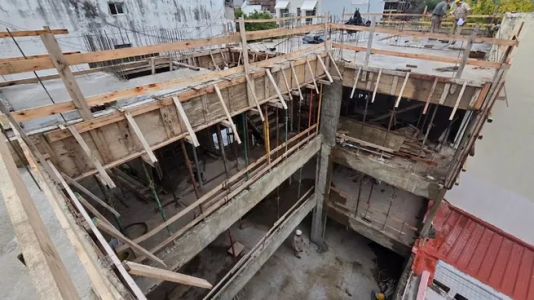
The progress of the work shows the weight of the construction cost, which impacts margins and conditions new developments in all segments
Construction costs have once again shaken up the real estate market, and studio apartments are emerging as the first indicator of this shift in Buenos Aires . With prices hovering around US$1,600 per square meter, even the smallest units are becoming unaffordable for a significant portion of the market.
This is a significant detail. A 25 m2 studio apartment costs over US$40,000 in direct construction costs alone—labor and materials—not including the value of the land, taxes, fees, or developer margin, which significantly raises the final price.
That number defines the floor from which the final price is built and explains why it is becoming increasingly difficult to find affordable options within the entry segment.
The performance of studio apartments offers insight into what's happening across the entire sector. They are the smallest product, with the lowest price tag, and they tend to absorb cost changes first. When this format begins to experience strain, the impact spreads to the other types of apartments.
Ariel Venneri , a consultant specializing in finance and economics and a partner at Grupo MAHE/PH Eco, stated that the market faces an obvious problem that is not always recognized.
He noted that the cost of construction went from about US$650 per m2 in December 2023 to levels close to US$1,600 today, with an approximate increase of 150% in dollars.

Source: Ariel Venneri, consultant specializing in finance and economics
From his perspective, the focus is not on traditional factors. He indicated that neither the tax burden nor labor costs registered changes that would explain this jump.
The “elephant” behind the cost
Venneri described the situation with a direct metaphor. He argued that the market discusses secondary variables while the main problem remains in plain sight.He emphasized that the exchange rate dynamics are causing a profound distortion. He argued that if the dollar had kept pace with cost increases, it should be trading well above its current levels.
He estimated a delay of close to 80%, which directly impacts the cost measured in dollars and explains a good part of the price increase.
This imbalance is clearly reflected in smaller units. In the case of studio apartments, where every square meter counts, the increased cost has a direct impact on the final price.
An unprecedented price gap
The increase in costs is not reflected in the sales prices. This difference creates an unusual situation.Venneri noted that both used and new apartments are priced lower than comparable units under construction or off-plan. He considered this an unprecedented phenomenon in the Argentine market.
This gap directly affects studio apartments. As an entry-level product, they depend on a balanced relationship between cost and price to sustain demand.
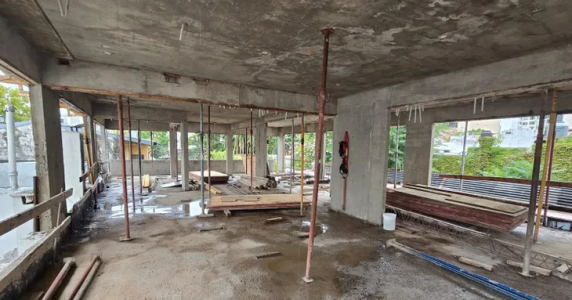
Structures under construction reflect the new scenario in the sector, with dollar costs at high levels and under constant pressure
When that relationship breaks down, the segment loses dynamism and ceases to fulfill its function within the market.
The exchange rate mismatch emerges as one of the central points of the analysis. If the MEP dollar had followed the evolution of the construction cost index (CAC) since December 2023, it should be around $2,536 today. However, it remains close to $1,400, which implies a lag of approximately 80%.
This distortion generates concrete effects on the market. Venneri elaborated: "One of the most visible is the reversal of pricing logic: on average, used or brand-new apartments in urban areas are priced below comparable units under construction or off-plan, an unprecedented situation in recent Argentine history and completely outside the sector's historical patterns."
The impact of the contained dollar
The data gathered by the market supports this diagnosis. Germán Gómez Picasso , from Reporte Inmobiliario, provided figures that reflect the pressure on housing costs in general.He indicated that as of March 2026, the cost to build a typical building exceeded 1.9 billion pesos, with a monthly increase of approximately 2.9%.
He explained that the behavior largely responds to the evolution of labor and subcontracts, which show greater dynamism than materials.
When these values are converted to dollars, the cost also increases. Exchange rate stability prevents the increases in pesos from being diluted.
Gómez Picasso pointed out that the cost per square meter of saleable space is around US$1,700, above the average of the last twelve months.
Profitability under tension
The increased cost directly impacts the profitability of developments. In the case of studio apartments, the effect is even more noticeable.Because these units are smaller, the margin for absorbing price increases is more limited. This forces companies to adjust prices or sacrifice profitability.
Venneri warned that the problem isn't a lack of credit. He pointed out that the central issue is the loss of profitability in projects.
He also questioned the idea that efficiency could compensate for an increase of this magnitude. He considered it a structural problem that requires different kinds of solutions.
Less room for new projects
The current situation is causing a shift in decision-making. Many developers are reviewing projects or postponing launches. Studio apartments, which typically lead the market in the initial stages, are also showing signs of adjustment.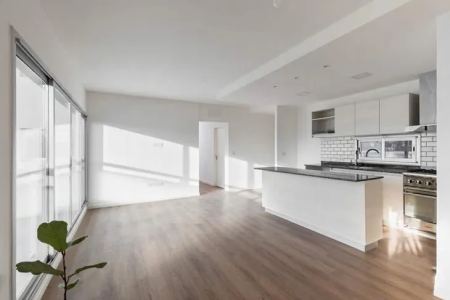
Due to the high prices, in most Buenos Aires neighborhoods it is more affordable to buy a brand new apartment than one under construction.
Some schemes aim to reduce surface areas or incorporate more efficient construction solutions. However, these strategies do not fully offset the increase in costs.
Gómez Picasso emphasized that the relationship between cost and selling price becomes the primary factor in determining a project's viability. In segments where the market does not support price increases, this equation becomes especially critical.
A market in unstable equilibrium
The combination of rising costs and contained prices creates a complex scenario. Studio apartments immediately reflect this tension.On the one hand, the increased cost raises the price floor. On the other hand, the purchasing power of consumers limits those prices.
This imbalance impacts the overall market dynamics. It reduces the volume of transactions and hinders the emergence of new supply.
Venneri argued that maintaining this system only deepens the distortion. He pointed out that a flawed diagnosis hinders the search for solutions.
What might happen next?
The future of the market will depend on how that gap evolves. If costs continue to rise and prices don't keep pace, the pressure on development will remain.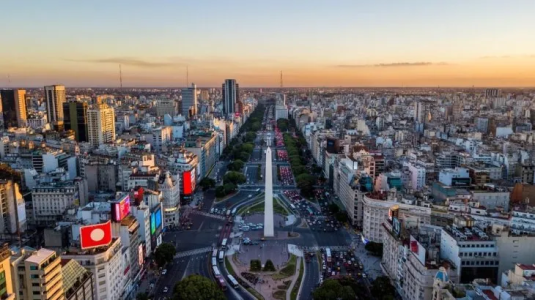
High costs are redefining the construction landscape in Buenos Aires and conditioning the development of new projects in the city.
Architect Fabricio Mouras , a real estate market expert, pointed out that the dollar-denominated price remains high and is impacting projects in areas where the sale price doesn't reflect that benchmark. He indicated that maintaining a balance is delicate and requires a rigorous evaluation of each project.
Access to credit emerges as a key variable. Without widespread mortgage financing, the construction of single-family homes remains concentrated in sectors with the capacity for personal savings.
“The divisible mortgage project never moved forward and is hardly mentioned today. It would be a key tool to revive economic activity,” Mouras added.
Gómez Picasso concluded that the key lies in achieving a balance between construction costs and marketing values, "since the sustainability of the real estate business depends on that relationship."
www.buysellba.com