

earlyretirement
Moderator
A bit of good news with all the doom and gloom.
Miniso, the global lifestyle brand, has officially announced its entry into the country. They are deploying $50 million to open 100 stores over the next five years.
Here is why this is a textbook counter-cyclical real estate play: 🧵👇
1/ The Scale of the Rollout Miniso isn't just testing the waters; they are flooding the zone. The plan requires securing 100 storefronts ranging from 200 to 600 square meters, creating up to 1,000 direct jobs. The first massive flagship opens in late April on the Calle Florida pedestrian corridor, alongside a location in the DOT Baires Shopping mall.
2/ Buying the Dip Right now, domestic consumption is tight, and commercial vacancy rates on prime Buenos Aires corridors have spiked. Recent data shows empty storefronts on major avenues are up 40% year-over-year (with Av. Cabildo seeing a staggering 257% jump in vacancies and Av. Santa Fe up 75%).
3/ The Strategy By entering the market now, Miniso’s local operators - the same group behind brands like Birkenstock and Melissa -are locking in premium, high-traffic commercial leases at the absolute bottom of the market cycle. They are securing tier-one real estate while local competitors are retreating.
4/ The Timeline Year 1 is entirely focused on dominating CABA and Greater Buenos Aires. Once they establish a stronghold in the capital and absorb the best available inventory, Year 2 will trigger their expansion into the interior provinces and high-traffic transit hubs like airports.
5/ The Bottom Line When a brand with 7,700 global locations and $2.45B in annual sales aggressively moves into a distressed market, it is a massive signal.
Smart capital doesn't wait for the macroeconomic recovery to be obvious; it buys the prime real estate while everyone else is looking the other way.
Buy when there is blood in the streets.
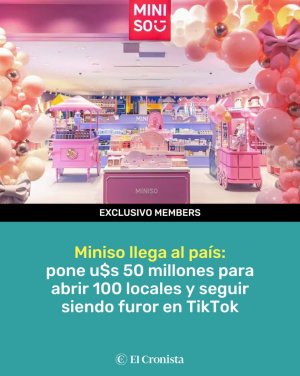
Miniso, the global lifestyle brand, has officially announced its entry into the country. They are deploying $50 million to open 100 stores over the next five years.
Here is why this is a textbook counter-cyclical real estate play: 🧵👇
1/ The Scale of the Rollout Miniso isn't just testing the waters; they are flooding the zone. The plan requires securing 100 storefronts ranging from 200 to 600 square meters, creating up to 1,000 direct jobs. The first massive flagship opens in late April on the Calle Florida pedestrian corridor, alongside a location in the DOT Baires Shopping mall.
2/ Buying the Dip Right now, domestic consumption is tight, and commercial vacancy rates on prime Buenos Aires corridors have spiked. Recent data shows empty storefronts on major avenues are up 40% year-over-year (with Av. Cabildo seeing a staggering 257% jump in vacancies and Av. Santa Fe up 75%).
3/ The Strategy By entering the market now, Miniso’s local operators - the same group behind brands like Birkenstock and Melissa -are locking in premium, high-traffic commercial leases at the absolute bottom of the market cycle. They are securing tier-one real estate while local competitors are retreating.
4/ The Timeline Year 1 is entirely focused on dominating CABA and Greater Buenos Aires. Once they establish a stronghold in the capital and absorb the best available inventory, Year 2 will trigger their expansion into the interior provinces and high-traffic transit hubs like airports.
5/ The Bottom Line When a brand with 7,700 global locations and $2.45B in annual sales aggressively moves into a distressed market, it is a massive signal.
Smart capital doesn't wait for the macroeconomic recovery to be obvious; it buys the prime real estate while everyone else is looking the other way.
Buy when there is blood in the streets.