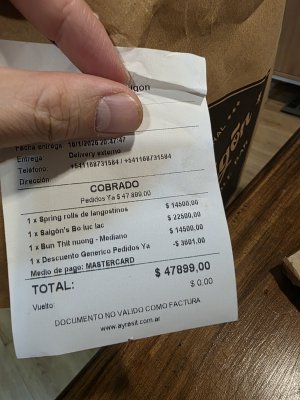
The price is first world, the local wage is third. Am I right or am I right? 🤣
This seems to be the case. I am still shocked prices can be this high and salaries so low.
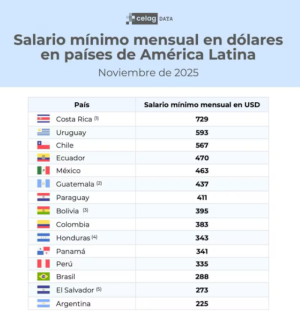
I assume not many people here make minimum salary but I am not sure. I met many here and no one makes this little but it still goes to show you how low salaries are. I asked Grok how Argentina's wages compare to other countries in South America and gave me this.
As of January 2026, Argentina's Salario Mínimo Vital y Móvil (SMVM) stands at ARS 341,000 per month for full-time monthly workers (with hourly rates at ARS 1,705 for jornalizados/day workers). Due to the exchange rate and ongoing economic factors (including high inflation and currency depreciation), this converts to roughly USD 220–235 per month (using recent official/parallel rates referenced in sources around ARS 1,400–1,500 per USD).This places Argentina among the lower end of minimum wages in South America when measured in US dollars (PPP or purchasing power adjustments can vary the real comparison, but nominal USD is the most common cross-country metric).Here's a comparison of approximate monthly minimum wages in South American countries (focusing on major ones; data reflects early 2026 or latest 2025/2026 figures, converted to USD where available; note that some countries adjust variably by sector/region, and values can shift with inflation or policy changes):
- Uruguay: ~USD 590–620 (often highest or near-highest in the region)
- Chile: ~USD 570–600 (CLP 529,000)
- Ecuador: ~USD 460–470
- Paraguay: ~USD 430–440
- Bolivia: ~USD 360–405 (BOB 2,500–2,750)
- Colombia: ~USD 350–390 (COP 1,423,500 + transport subsidy; some reports note higher effective with recent hikes)
- Peru: ~USD 300–335 (PEN 1,130)
- Brazil: ~USD 245–300 (BRL 1,518–1,627 projected)
- Argentina: ~USD 220–235 (ARS 341,000)
- Venezuela: Extremely low (~USD <1–3 in practice due to hyperinflation and economic collapse)
Argentina's minimum wage is notably below neighbors like Uruguay, Chile, and even Bolivia or Colombia in USD terms, and closer to (or slightly below) Brazil and Peru. The gap widens when considering purchasing power in stable economies vs. Argentina's high inflation environment, where the nominal figure buys less locally despite periodic adjustments.These figures come from aggregated reports (e.g., Deel, Statista, Trading Economics, official government resolutions, and regional analyses as of January 2026). Minimum wages often exclude benefits (e.g., transport subsidies in Colombia, bonuses in some countries), and informal sectors (common in the region) frequently pay less. For the most precise/current value, check official sources like Argentina's Secretaría de Trabajo or equivalent ministries, as adjustments can occur monthly or annually.