

BuySellBA
Administrator
Building homes costs exceed $2 million per square meter, and the off-plan real estate market is entering a critical zone - Ambito Financiero

Source:

Construir viviendas supera los $2 millones por m2 y el mercado inmobiliario de pozo entra en zona crítica
Con costos en alza, dólar a la baja y demanda que no convalida precios, desarrolladores advierten márgenes al límite y obras cada vez más ajustadas.
 www.ambito.com
April 15, 2026
By José Luis Cieri
With rising costs, a falling dollar, and demand that doesn't justify prices, developers warn of margins being pushed to the limit and increasingly tight construction projects.
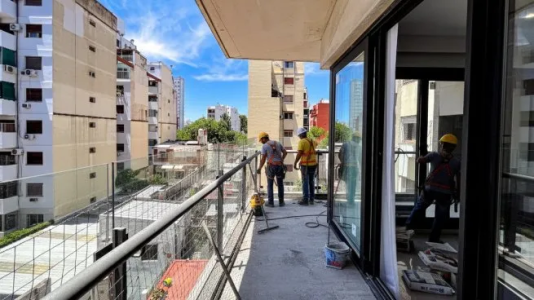
Building is a major economic challenge these days. For now, there's no sign of costs stabilizing or prices decreasing on the horizon.
Construction costs in Argentina have once again reached a new milestone and are beginning to redefine the equation for the entire real estate business. Despite a nascent recovery in credit and greater macroeconomic stability, prices remain high, putting pressure on both developers and buyers of off-plan properties.
The cost of construction in Argentina has now exceeded $2,000,000 per square meter , establishing a new floor for the sector. This data comes from the latest report by the Association of Small and Medium-Sized Construction Companies (APYMECO), an organization that tracks the evolution of construction costs monthly based on a standard multi-family building model . Its index is one of the sector's key benchmarks for measuring prices, cost structure, and the dynamics of the industry.
In that context, the latest report confirmed that construction is not only expensive, but is also entering a more complex stage: costs remain high, but the pre-construction real estate market is beginning to put a ceiling on sale prices.
Key data
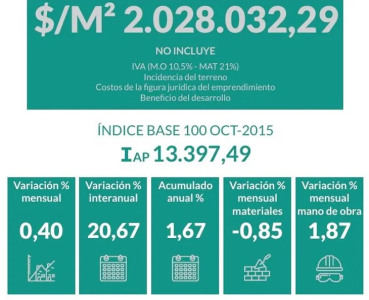
Data according to APYMECO:- Construction cost: $2,028,032.29 per m2.
- Value in dollars: goes from US$1,427.56/m2 to US$1,433.24/m2.
- Variation: +0.40%.
- Total monthly variation: +0.40%.
- Materials: -0.85%.
- Labor: +1.87%.
- Year-on-year: +20.67%.
- Year-to-date: +1.67%.
- Water heaters: +18.64%.
- Woodworking: +8.62%.
- Asphalt paint: +5.14%.
- Sanitary fixtures: -4.44%.
- Round iron: -9.50%.
- Elevators: down
Source: Association of Small and Medium-Sized Construction Companies (APYMECO)
Activity
- Cement dispatch:
- -11.6% monthly
- -5.8% year-on-year
- Labor: 27.18%.
- Materials: 39.67%.
- Third-party provisions: 11.96%
Subtotal direct cost: 78.81%.
- Labor: +1.87%.
- Materials: -0.85%.
- Third-party provisions: +1.20.
In adjustment zone
Based on these figures, the sector is beginning to show a shift in direction. It's no longer just about increases, but about how those increases are absorbed in a market that is starting to impose limits.“The increases have already happened. Today the cost is more stable,” said Sebastián Orlandi of the developer FLAMMA. However, he warned that the problem has shifted: “If the cost of materials increases in pesos but the dollar falls, the cost in dollars becomes more expensive and the equation becomes more complicated.”
In that context, a central tension emerges. He elaborated: “The market doesn’t always validate those increases,” thus highlighting the gap between costs and selling prices.
This decoupling directly impacts profitability. Orlandi commented: “Margins are very thin. There are developers working with negative margins or eroding their capital.”
He even explained that in some cases the replacement cost exceeds the market value. “You might have a cost close to US$3,000 per square meter, but you end up selling below that to recover liquidity and move forward,” he stated. In that scenario, many choose to lower the price to maintain the flow of construction.
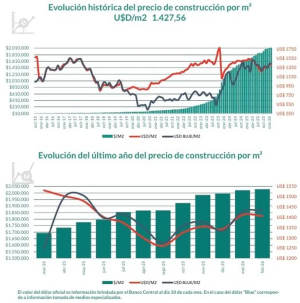
Source: Association of Small and Medium-Sized Construction Companies (APYMECO)
In this context, efficiency becomes the primary tool . “Today, the task is to optimize everything: from product design to execution, without sacrificing quality,” Orlandi stated. He explained that macroeconomic stabilization and lower inflation necessitate much more precise cost management.
Meanwhile, financing continues to rely on the sector's traditional model. Orlandi added: “On-site development is financed through investor contributions and payment plans. This allows for smaller down payments and installment payments during construction.” He also highlighted that this approach offers advantages over finished products, such as the possibility of customization.
Why aren't costs going down?
From another perspective, the diagnosis points to more structural factors. Malí Vázquez , executive director of the Chamber of Urban Developers (CEDU), explained that the reduced activity is not enough to generate a decrease in costs.He pointed out: “The drop in the volume of works does not automatically translate into lower costs because the structure that supports them remains very high.”
Among the main factors, he mentioned the tax burden, labor costs, and the costs associated with formalization , which create a difficult floor to break through. Added to this are inputs tied to the dollar and adjusted for inflation, as well as structural problems such as bureaucracy, with slow approval processes and a lack of digitalization.
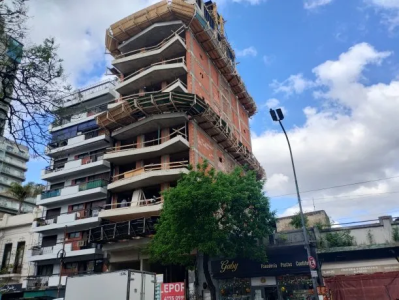
Rising costs, a falling dollar, and selective demand: the new scenario complicating the well market
Vázquez warned: “All of this completes a picture in which the lower demand is not enough to generate a real price correction.”
What could change the scenario
To reverse this trend, Vázquez proposed a reform agenda on several fronts. First, he mentioned the need for targeted tax relief for housing and projects aimed at the middle class."It could have a direct impact on the cost per square meter without excessively compromising revenue collection," he explained.
He also emphasized the importance of moving towards a deeper and more predictable credit system. Vázquez noted: “Today, the cost of financing forces lenders to demand very high returns for a business to be viable.”
On the regulatory front, he proposed simplifying procedures, shortening deadlines and improving regulatory predictability, which would allow for a reduction in indirect costs and the risk premium.
Finally, he stressed the need to improve the productivity of the entire chain: more competition in inputs, promotion of efficient construction systems and modern labor agreements.
Vázquez concluded: “That, coupled with a more stable macroeconomic environment, is what could transform a stabilization into a real and sustained decrease in costs.”
www.buysellba.com