

BuySellBA
Administrator
Buenos Aires continues to build housing despite population stagnation: 13.8% of properties are vacant - Ambito Financiero

Source:

CABA sigue construyendo viviendas pese al estancamiento poblacional: el 13,8% de las propiedades están vacías
Entre 2010 y 2022 el parque creció un 15% y la población apenas un 6,7%. Se edificó más, pero orientado a inversión y renta antes que a la demanda habitacional.
 www.ambito.com
April 15, 2026
By Jose Luis Cieri
Between 2010 and 2022, the housing stock grew by 15%, while the population increased by only 6.7%. More construction took place, but it was geared towards investment and rental income rather than meeting housing demand.
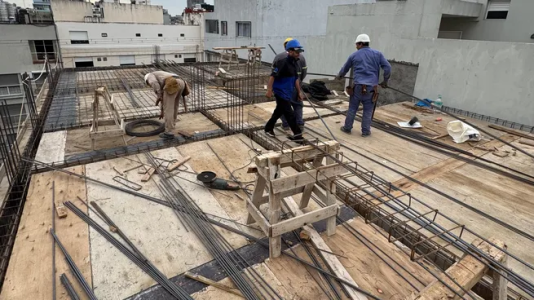
In neighborhoods like Colegiales, real estate development is accelerating with new projects geared towards investment and rental income.
A private analysis confirmed something unprecedented in the real estate construction and development market. The data is compelling and defies market logic: the City of Buenos Aires built almost twice as many homes as new residents in just over a decade, yet it still accumulates vacant units. According to the 2022 Census, 13.8% of properties are unoccupied, more than double the level the market considers technically healthy.
Between 2010 and 2022, the housing stock grew by 15% while the population increased by only 6.7%. Approximately 0.9 homes were built for every new resident . For experts, the problem isn't scarcity: it's misalignment. Convened by Terres, an Argentine real estate platform specializing in land sales, the specialists addressed the biggest question: how many people could live in Buenos Aires if the city were fully developed?
A city that is renewing itself but not growing
Much of the answer begins with the land itself: according to data compiled by Daniel Bryn , a real estate market analyst at Zipcode, 48% of the plots of land in the City of Buenos Aires are over 80 years old. In neighborhoods like San Telmo, that percentage climbs to 79%; in Retiro, to 72%; and in San Nicolás, to 70%.He said: "Demolishing and rebuilding does not automatically equate to adding inhabitants: if the new building is mainly composed of studios or investment-oriented units, the net population does not move."
Lucía Bellocchio , founder and CEO of Trend Smart Cities and academic director of the Smart Cities Diploma program at Austral University, identified this phenomenon as “morphological replacement without population growth”: new buildings that replace older typologies (houses, townhouses, or small buildings), but which do not necessarily house more inhabitants. “More is being built, but it doesn’t always lead to increased population density,” she explained.
Added to this is a demographic shift that has been building for decades and that the market is only now beginning to process. The average household size in Buenos Aires has fallen from 4.5 people in the mid-20th century to 2.6 today, according to data from the National Institute of Statistics and Censuses.
More homes, smaller homes, needing more units to house the same number of people. A significant portion of new construction doesn't create new residents: it compensates for the fragmentation of those already living there.
Joaquín Tomé, director of the Center for Urban Economic Studies (CEEU) at the National University of San Martín (UNSAM), added a dimension that is often left out of the debate: “Higher income leads to a greater demand for space. Part of the new housing stock corresponds to households with greater purchasing power that consume more space per person. The result is more square meters per inhabitant, not more inhabitants.”
The result of this combination is evident in the figures: the 2022 Census recorded 13.8% vacant units in the City of Buenos Aires, more than double the 5-6% that specialists consider technically healthy. In a market lacking widespread mortgage credit and with high macroeconomic instability, real estate serves a financial function rather than a residential one. It's built. It's bought. But people don't always live there.
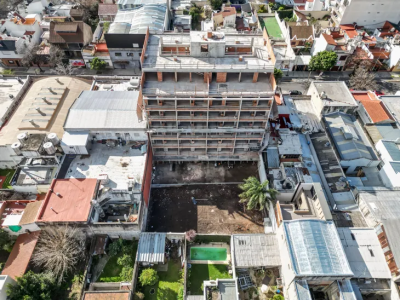
Construction is progressing in the city, but the growth in the housing stock is not translating into more inhabitants.
“The city’s boundary doesn’t seem to be physical,” said Federico Akerman of Terres. “It’s much more linked to how land is managed, what kind of housing is produced, and what kind of urban life is prioritized.”
The map: where it grows and where it doesn't
Intercensal data reveals a city whose population growth is not uniform. District 13 (Belgrano, Colegiales, and Núñez) saw a 14.6% increase in residents between 2010 and 2022. Villa Urquiza and Caballito grew by up to 18%. District 8 (Villa Soldati, Villa Riachuelo, and Villa Lugano) added 17,605 new residents, a 9.4% increase. Conversely, District 7 lost 3,759 inhabitants while gaining 12,400 new homes.The paradox of the Microcentro (downtown area) encapsulates the problem better than any statistic. It's one of the best-connected areas of the city, with established infrastructure and direct access to all subway lines. And yet, it's not taking off. Federico Poore , an urban planning consultant and editor of the newsletter Una calle me separa (One Street Separates Me ), said: “What's clear is that leaving the private sector as the sole driver of development only exacerbates pre-existing inequalities.” He elaborated: “Incentives for private investment have proven insufficient to revitalize depressed areas.”
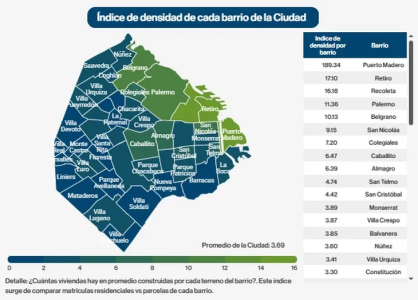
Source: Zipcode
For Bryn, the phenomenon has its own logic: the neighborhoods with the best urban quality index (Palermo, Belgrano, Recoleta) are already the most densely populated. Puerto Madero leads with 18.9 dwellings per lot. Villa Lugano, Mataderos, and Liniers have the greatest potential for growth, but the least market traction. “Growth isn't just physical: it's also aspirational,” he explained.
In this sense, the specialist breaks down densification into:
High-density neighborhoods.
Puerto Madero (18.9 homes per plot).
Retiro(17.1).
Recoleta (16,1).
Palermo (11,3).
And others with very low density.
Villa Lugano.
Mataderos.
Liniers.
He argued: “In technical terms, the City of Buenos Aires could grow. In real urban terms, it cannot grow equally everywhere.”
For her part, Micaela Alcalde , an architect and urban planner, identified the crux of the problem: “There are many areas that are not validating the development market despite having the potential for more supply. The cause probably lies in the quality of services: schools, green spaces.”
The product that the market makes and the one that the city needs
35.7% of households in Buenos Aires are single-person households. 40% have no children. 23% of the population is over 60 years old: Buenos Aires City is the oldest jurisdiction in the country. These figures should be shaping what is being built. To a large extent, they are not.For Tomé, this disconnect has concrete historical roots. He pointed out: “The apartment in Buenos Aires didn't arise solely as a response to a demographic need, but as a result of a legal and economic structure. The Horizontal Property Law transformed housing into a divisible, transferable, and accumulable asset. Since then, the apartment has been simultaneously a home and an investment vehicle.”
“The market doesn’t strictly respond to comprehensive housing demand, but rather to solvent and financially efficient demand. The type of unit produced is the one that functions best as an asset, not necessarily the one that optimizes the population structure,” he explained.
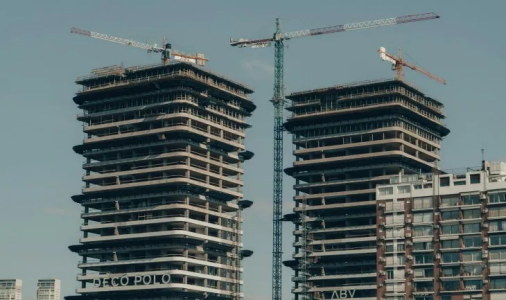
Palermo, one of the neighborhoods with the most construction in Buenos Aires for more than 25 years
For his part, Bryn explained that “the prolonged absence of mass mortgage credit pushed development towards small, repeatable, and profitable products that can be sold for cash. That doesn't always coincide with permanent housing.”
In 2025, mortgage loans for new construction represented just 4% of outstanding loans to individuals, according to data compiled by Tomé. “Without long-term financing, the solvent demand isn't the average family: it's the investor with liquidity. And the product is designed accordingly,” he stated.
The result is an offering that doesn't meet the needs of a large part of the city. "There is still unmet demand, such as from small families who require apartments with large terraces or penthouse-style units," Alcalde pointed out.
Akerman summarized it in terms of a model: “It’s not about choosing between a single-family home or a repeated tower. It’s about expanding the repertoire: we need intermediate typologies, homes that accompany different trajectories, and an offering less captured by a single exit logic.”
How to reach one million residents of Buenos Aires
Urban planning estimates place the actual population capacity of Buenos Aires at between 4 and 5 million inhabitants, according to Bellocchio. This limit, he clarified, “is not only technical: political decisions, urban planning regulations, real estate market dynamics, and preferences regarding how we want to live in the city all play a role.”Buenos Aires today has 3 million inhabitants. Addressing this gap doesn't require demolishing the city or building from scratch. It requires leveraging three specific factors.
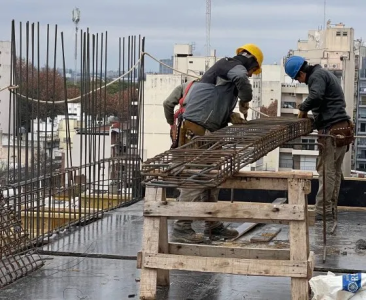
The change in housing types and sizes defines what, how, and for whom construction takes place in Buenos Aires.
The first is credit. Poore argued: “To build a balance between constructability and affordability, a more active role of the State is necessary.”
The second lever is territorial. “CABA already has networks, transportation, facilities and centrality that would allow it to accommodate more people better than much of the metropolitan expansion,” Akerman said.
Each family that cannot find affordable housing in the city ends up in the suburbs, with greater distance, longer travel times, and higher infrastructure costs.
Bellocchio put that cost into perspective: “It’s a less efficient model. It forces the extension of transportation networks, services, and facilities to areas increasingly distant from the city’s productive core,” he explained. “Under the 15-minute city approach, density is not a problem but a tool,” he maintained.
The third factor is typology. “Buenos Aires isn’t limited by a lack of square meters. It’s limited by how, where, and for whom those square meters are built,” Bryn said. He concluded: “If most development focuses on small units as investment, the city may grow in buildings, but not necessarily in population.”
www.buysellba.com