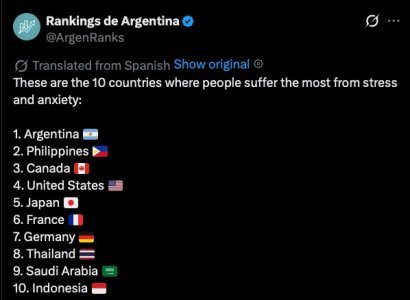
Your comment about stress actually reminded me of something from my childhood.
When I was about 13 my father, a U.S. Air Force officer, was stationed in Tokyo. We lived off base and I ended up joining a
Japanese Boy Scout troop, which turned out to be one of the best cultural educations a young American kid could have.
Through the Scouts I became friends with a group of neighborhood boys who trained at a
Japan Karate Association (JKA) dojo. One afternoon they invited me along.
Walking into that dojo as a skinny American kid was a little intimidating. Everything was formal, disciplined, and very quiet compared with what I was used to. The sensei spoke almost no English, and my Japanese vocabulary at the time consisted mostly of Boy Scout phrases and the names of food.
But karate has a universal language. You bow, you line up, and you try not to embarrass yourself doing the basics. The training was very traditional Shotokan—lots of kihon, kata, and what felt like endless repetition of stances.
Looking back on it now, I realize that those classes were probably teaching something beyond just punching and kicking. They were teaching young people
how to deal with pressure, frustration, and stress in a controlled environment. You got corrected, you tried again, and gradually you improved.
That experience has stayed with me for decades. In fact Elisa and I are still exploring similar disciplines today. We have a
Qigong and Tai Chi instructor who comes to our house once a week, and in just a few months we’ve seen remarkable benefits. I feel lighter and more flexible, and Elisa—who has dealt with long-term neck pain—has had noticeable improvement.
So when discussions about stress come up, I sometimes think back to that dojo in Tokyo. For many young people, learning structured ways to handle pressure—whether through sports, martial arts, music, or other disciplines—can be just as important as anything else in their development.
Just another observation from someone who has spent a lifetime watching how different cultures deal with stress.
I saw Argentines ranking second globally in family ties.
Probably helps a lot as well.
I saw Argentines ranking second globally in family ties.
Probably helps a lot as well.
Interesting point. I would be curious how
“family ties” are defined in that survey.
In many cultures that could mean emotional closeness, frequent contact, living near extended family, or even economic support networks between generations. Those are very different things depending on how the researchers measure them.
Argentina definitely has strong family culture — Sunday asados, multiple generations staying connected, etc. But it would be interesting to know
what indicators they used to rank countries. That might explain the results.
One interesting aspect here is the legal process called
sucesión, where property is formally transferred from parents to children through the courts after someone passes away. From what I understand, those cases can sometimes take years because of court backlogs and the complexity of Argentine inheritance law. It’s another example of how deeply family and property relationships are intertwined across generations here.
So it would be interesting to know
what indicators the researchers used to measure “family ties.” That might help explain the ranking.