

BuySellBA
Administrator
Andrés Brody, developer: “When producing housing becomes too expensive, the problem ceases to be about real estate.” - La Nacion Propiedades

Source:

Andrés Brody, desarrollador: “Cuando producir vivienda se vuelve demasiado caro, el problema deja de ser inmobiliario”
El empresario afirma que el costo final de una vivienda no tiene que ver solo con el precio de la tierra o el costo de los materiales
 www.lanacion.com.ar
April 08, 2026
The businessman states that the final cost of a home is not solely related to the price of the land or the cost of materials.
By Andres Brody
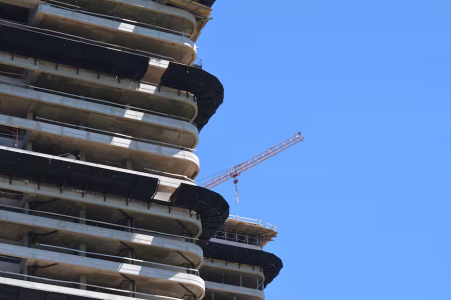
The rising cost of construction shows no signs of letting up.Daniel Basualdo
Argentina is a country full of paradoxes . It has one of the largest territories in the world, vast areas suitable for development, and cities that still have room to grow. However, access to housing remains one of its most persistent structural problems , especially in large metropolitan areas.
In the city of Buenos Aires, for example, the price per square meter of finished property remains far above what most families can afford . Faced with this reality, the explanation is often simplified: it's attributed to the price of land or the cost of materials . But when one analyzes how the final value of a home is actually determined, a more complex reality emerges.
Building in Argentina is expensive not only because of the cost of the work , but also because of a combination of factors that includes a heavy tax burden, long administrative times and a level of legal uncertainty that often discourages investment.
The process begins long before the first brick is laid . A developer who buys land in Buenos Aires faces stamp duties, notary fees, and registration costs from the outset. Then begins the process of obtaining permits, plans, and approvals from the public administration .
In practice, a real estate project can take many months —and sometimes more than a year— to complete the entire permitting process . In a country with high inflation and economic volatility, each month of delay has a direct financial cost that inevitably ends up being passed on to the final price of the project.
Added to this is the burden of taxes during the construction phase . Materials are subject to VAT, construction companies pay Gross Income Tax, and the entire production chain—suppliers, services, and contractors—incorporates taxes that impact the final price of the home .
But there is another factor that rarely appears in the public debate and that also makes urban development more expensive: legal risk .
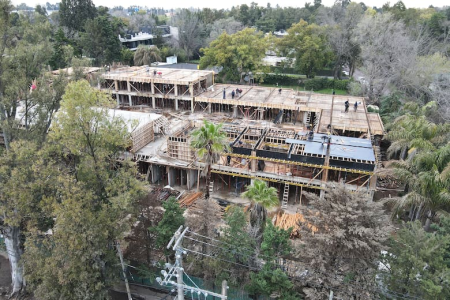
"A real estate project can take many months to go through the entire authorization process," the developer explains.Ricardo Pristupluk
In recent years, there has been a proliferation of legal appeals seeking to halt real estate projects, even when these projects have permits granted by the public administration itself.
In various neighborhoods of the city of Buenos Aires —such as Palermo, Belgrano or Núñez— several construction projects were paralyzed for months or even years due to legal disputes related to interpretations of the urban planning code or administrative challenges.
When a project is halted, the economic impact is immediate : financial costs continue to accrue, contracts must be renegotiated, materials already purchased are tied up, and buyers face uncertainty about delivery times .
Beyond the legal debate, this phenomenon introduces a level of unpredictability that increases the risk of any real estate project. And as with any economic activity, when risk increases, so does cost .
Adding to the legal uncertainty is the cumulative effect of taxes. Throughout the entire process, different levels of government —national, provincial, and municipal—are involved, levying taxes such as VAT, Gross Income Tax, bank debit tax, municipal fees, building permits, and urban development contributions.
In the city of Buenos Aires, there are also mechanisms for capturing urban value increases that aim to recover some of the value generated by developments. While this objective may be legitimate from an urban planning perspective, the overall effect ultimately impacts the final price of housing .
Various industry analyses estimate that, between direct and indirect taxes, the State can capture a very significant proportion of the final value of a real estate development.
This creates a paradox that is difficult to resolve: while public policy seeks to expand access to housing, the system itself ends up making the process of producing it more expensive .
In this context it is also necessary to review the social perception of the role of the urban developer .
Developers are often seen solely as those who profit from real estate ventures. However, in practice, their role is much broader .
The developer is the one who assumes the initial risk of the project , organizes the capital, coordinates the work of architects, engineers and construction companies, manages the permits and articulates a production chain that involves hundreds of workers and suppliers .
Each new building implies direct and indirect employment , economic activity in multiple sectors and the creation of new urban infrastructure.
Real estate development , in short, does not only produce buildings: it also produces cities .
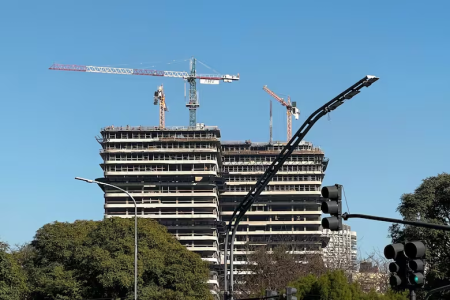
The final effect ends up being reflected in the price of housing.Daniel Basualdo
When the regulatory system becomes overly complex or when legal risk becomes unpredictable, the impact doesn't fall solely on developers. The ultimate effect is passed on to housing prices and, ultimately, to those seeking to buy homes.
If we truly want to expand access to housing, the debate should not focus solely on how to stimulate demand or how to recreate mortgage credit .
It is also essential to analyze how the supply is produced.
Reducing administrative times, simplifying processes, improving legal certainty, and reviewing the cumulative impact of the tax burden could have concrete effects on the final cost of housing.
Argentina has professionals, construction companies, and developers with enormous capacity to build cities. What is often lacking is a simpler, more predictable, and more efficient framework that allows that capacity to be transformed into more housing .
Because when producing housing becomes too expensive, the problem ceases to be real estate-related .
www.buysellba.com