

BuySellBA
Administrator
Traditional construction vs. steel frame in 2026: which better protects your investment? - La Nacion Propiedades

Source:

Construcción tradicional vs. Steel Frame en 2026: ¿cuál protege mejor tu inversión?
En un mercado volátil y con inflación que no cede, el debate gira en torno al poder de reventa y la robustez frente a la eficiencia y rapidez
 www.lanacion.com.ar
April 06, 2026
In a volatile market with persistent inflation, the debate revolves around resale power and robustness versus efficiency and speed.
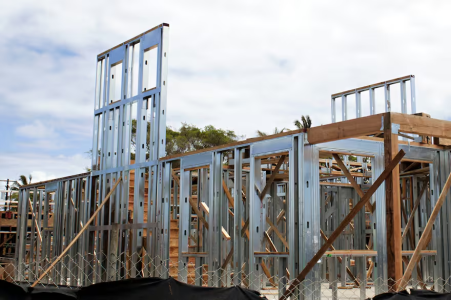
Construction systems are innovating with new methods, such as Steel Frame.Shutterstock
The debate between traditional construction and steel frame has ceased to be a technical discussion and has become a matter of investment. In 2026, with volatile costs, persistent inflation, and a real estate market that rewards efficiency, the central question is no longer just which system is faster or more modern, but which best protects the long-term investment . The answer is not straightforward, because each method offers different advantages depending on the type of project, its intended use, and the owner's concerns regarding maintenance and appreciation.
Traditional construction maintains a strong cultural presence in Argentina. Brick, concrete, and wet structures continue to convey a sense of solidity , an emotional value that influences buyer perception. This perception translates into a market where, in many neighborhoods , people continue to pay a premium for homes built with durable materials.
Furthermore, its proven durability over decades and the availability of skilled labor sustain its relevance. However, traditional construction also suffers from well-known problems : long lead times, dependence on weather conditions, higher maintenance costs, and energy efficiency that, except for specific interventions, often falls below current standards.
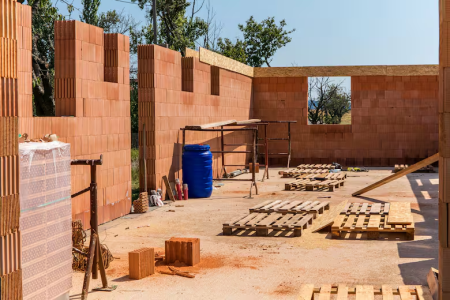
Building a house with bricks and cement is the traditional, accepted, and proven method.Shutterstock
Steel frame construction, on the other hand, has established itself as an industrialized, lightweight, and precise alternative . Its main strength is predictability: less waste, shorter construction times, and thermal performance that reduces energy consumption from day one. In a context where the operating costs of a home are almost as significant as the initial investment, this efficiency is becoming more of an economic than a technical argument. Added to this is the possibility of expanding or modifying with less structural impact, an attractive point for those who envision their home as an evolving project. In other words, dry construction has ceased to be a rarity and has become a preferred option for those seeking predictability in terms of both time and cost.
Which one is better?
But protecting the investment depends not only on the construction system itself, but also on how the market values it. In established urban areas, traditional construction still holds a resale advantage , especially among buyers who prioritize the idea of a "solid home." However, in new developments, gated communities, and projects where energy efficiency is a key differentiator, steel frame construction is gaining ground. The price gap between the two systems has narrowed, and in some cases, steel frame construction even offers a competitive final cost thanks to reduced construction time and less rework.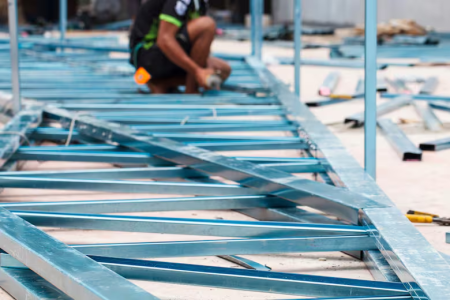
Steel profiles used in dry constructionShutterstock - Shutterstock
Another key factor in 2026 is resilience to maintenance . Traditional homes may require periodic interventions due to dampness, cracks, or settling, while a well-executed steel frame significantly reduces these risks. This doesn't mean it's infallible: its Achilles' heel remains the quality of the workmanship and the need to strictly adhere to insulation layers and vapor barriers. When these steps are omitted, the investment is compromised just as much as in any poorly executed project. In both systems, the actual protection of capital depends on the quality of the design and technical supervision.
In terms of insurance and risk, steel frame construction has also gained institutional recognition. Insurers now consider it a safe and stable system , overcoming one of the prejudices that hindered its adoption. Traditional construction, meanwhile, maintains its reputation for robustness but faces a growing challenge: energy efficiency. With stricter regulations and more informed consumers, a home that doesn't meet adequate thermal standards can lose relative value compared to more modern options.
Therefore, when faced with the question of which system best protects the investment , the conclusion is that if the goal is to maximize resale value in a traditional market, traditional wet construction remains a safe bet. However, if the priority is to reduce operating costs, shorten construction times, and ensure predictability in an uncertain economic climate, steel frame construction offers more dynamic protection that is better aligned with current demands.
www.buysellba.com