
Explore, connect, thrive in
the expat community

Expat Life: Local Discoveries, Global Connections

Argentina is #2 for the most Cash outside of the banking system

Finance Prof

Well-known member
Crazy the amount of cash under the mattress here in Argentina.

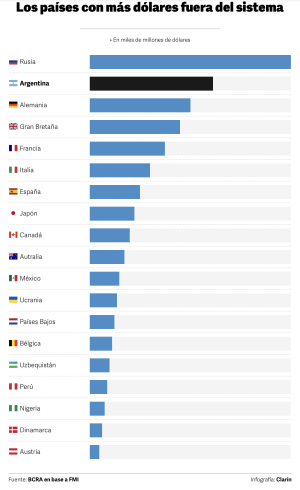
People in Argentina are holding roughly $250 billion in US dollars outside the country's official banking system. This massive sum is either hidden in physical cash—often jokingly referred to as being "under the mattress"—or sitting in foreign bank accounts. To put this in perspective, that amount is equal to nearly 40% of Argentina's entire economy.

Argentina is the second country globally in terms of total dollars held outside the system, the reality is even more striking. When you divide that money by the population, Argentina actually takes the number one spot in the world. On average, every single person in the country has about $5,400 saved up outside local financial institutions.

Economist Nery Persichini explains that hoarding dollars is simply a survival mechanism. Because of the country's history of high inflation and sudden economic shifts, citizens have learned to protect their wealth by keeping their savings in US dollars and far away from local banks.

The government desperately wants that $250 billion back inside the official banking system so it can be turned into credit and used to grow the economy. To encourage this, officials are offering fiscal incentives, like tax breaks and amnesty programs, while promising a stable, trustworthy environment so citizens feel safe bringing their dollars back home to invest.
HDFmKkbWIAA66cw.png
 
It's probably even higher than that. Some estimates are $350 Billion or more. Whatever official estimates are it's going to be MUCH much higher. Almost EVERY business deals with cash and it's more than the government or private estimates are.
I would agree with you. Many things are in cash and I don't think there is any way the government would know. I pay my rent to a local and I just send to her American bank with Zelle. I doubt Argentina knows about all of the money floating out there. Most of my friends actually pay cash for their rents to owners. How would the government even know these people are getting paid?
 
Cash can only be avoided in an economy when dealing in cash is more painful than other costs, such as taxes. The first thing, IMO, is to fix the government from looking at each and every transaction and to trust the businesses to do their jobs and stay honest. I know better said than done, but that's a start.

I cannot believe that every commerce transaction in Argentina has to go to AFIP (the tax authority) in real time. Each POS system is connected to the AFIP server and has to get a unique ID. This is an insane amount of distrust in the people/businesses. I have not seen this anywhere; correct me if this has been seen elsewhere, too.
 
Cash can only be avoided in an economy when dealing in cash is more painful than other costs, such as taxes. The first thing, IMO, is to fix the government from looking at each and every transaction and to trust the businesses to do their jobs and stay honest. I know better said than done, but that's a start.

I cannot believe that every commerce transaction in Argentina has to go to AFIP (the tax authority) in real time. Each POS system is connected to the AFIP server and has to get a unique ID. This is an insane amount of distrust in the people/businesses. I have not seen this anywhere; correct me if this has been seen elsewhere, too.
Never have seen the amount of red tape like here. They want an ID number when I go to the grocery store! Why?! At least now they stopped asking for ID but when I came here they demanded to see an id each time.

There is no trust here. When I asked why I have to pay cash for an apartment and I can't wire it. Their answer is they don't trust the banks. I have heard first hand from some that had problems. Most sellers refuse to accept a wire and will only agree if you pay in $100 bills (only the new blue $100 bills).

Then when it comes down to it part of the reason they also want to use cash is to use a lower price from actual price.

Then the realtor tells me if I want a receipt I have to pay 21% vat tax on their commission.

Same with the lawyer.

But they tell me if I want to pay cash I don't have to pay the 21%. Guess what most will choose?
 
It's probably even higher than that. Some estimates are $350 Billion or more. Whatever official estimates are it's going to be MUCH much higher. Almost EVERY business deals with cash and it's more than the government or private estimates are.
Correct. Take whatever they are estimating and double it to get realistic with how much "cash" is floating out there. Trust me on this. Anyone that does business or owns a company in Argentina will confirm this.

Cash can only be avoided in an economy when dealing in cash is more painful than other costs, such as taxes. The first thing, IMO, is to fix the government from looking at each and every transaction and to trust the businesses to do their jobs and stay honest. I know better said than done, but that's a start.

I cannot believe that every commerce transaction in Argentina has to go to AFIP (the tax authority) in real time. Each POS system is connected to the AFIP server and has to get a unique ID. This is an insane amount of distrust in the people/businesses. I have not seen this anywhere; correct me if this has been seen elsewhere, too.
100% spot on target. There is NO trust here at all. Most things are painful dealing with banking and finance. @bapalthey really need to avoid all of these taxes and that will solve some of the problems. But the problems run deeper than trust. Most people that don't own a business here will never understand how convoluted things are.

For example, look at the "Impuesto al Cheque" (check tax). Legally all expenses are supposed to be written with checks and not cash. This was supposed to be an emergency measure after the Corralito in 2001 but they never got rid of it. In a nutshell, the banks charge you 0.6% on EVERY credit/deposit and 0.6% on every debit (check or wire transfer). So the full cycle 1.2% in taxes all for doing nothing. Think of how crazy this is.

And the really crazy thing is that before the exchange rate was 1 to $1 USD but with the massive inflation 1,000 pesos is nothing. And that is what Argentina's Anti-Evasion Law (Ley 25.345), any transaction larger than 1,000 PESOS must be paid using a formal, banked method. If a business pays for something in physical cash above this amount, the government (ARCA/AFIP) legally refuses to let them deduct that expense from their income taxes or claim the VAT (IVA) credit.

So legally and technically every transaction in the business world is supposed to go through the banking system to be valid for tax purposes. The reality is not so much.

I can give you dozens of other crazy things. The typical person wouldn't know about this but then again the typical person would think these are absolutely crazy. I've owned many Argentine corporations. I've done business all over the world and have done business in Brazil, Mexico, Uruguay, and other places and nothing comes close to the absurdity of these laws and taxes.

It's also why cash will always be a part of business here until they get rid of crazy taxes like this.
 
Correct. Take whatever they are estimating and double it to get realistic with how much "cash" is floating out there. Trust me on this. Anyone that does business or owns a company in Argentina will confirm this.


100% spot on target. There is NO trust here at all. Most things are painful dealing with banking and finance. @bapalthey really need to avoid all of these taxes and that will solve some of the problems. But the problems run deeper than trust. Most people that don't own a business here will never understand how convoluted things are.

For example, look at the "Impuesto al Cheque" (check tax). Legally all expenses are supposed to be written with checks and not cash. This was supposed to be an emergency measure after the Corralito in 2001 but they never got rid of it. In a nutshell, the banks charge you 0.6% on EVERY credit/deposit and 0.6% on every debit (check or wire transfer). So the full cycle 1.2% in taxes all for doing nothing. Think of how crazy this is.

And the really crazy thing is that before the exchange rate was 1 to $1 USD but with the massive inflation 1,000 pesos is nothing. And that is what Argentina's Anti-Evasion Law (Ley 25.345), any transaction larger than 1,000 PESOS must be paid using a formal, banked method. If a business pays for something in physical cash above this amount, the government (ARCA/AFIP) legally refuses to let them deduct that expense from their income taxes or claim the VAT (IVA) credit.

So legally and technically every transaction in the business world is supposed to go through the banking system to be valid for tax purposes. The reality is not so much.

I can give you dozens of other crazy things. The typical person wouldn't know about this but then again the typical person would think these are absolutely crazy. I've owned many Argentine corporations. I've done business all over the world and have done business in Brazil, Mexico, Uruguay, and other places and nothing comes close to the absurdity of these laws and taxes.

It's also why cash will always be a part of business here until they get rid of crazy taxes like this.
Great post. Yes my wife's family has 5 different businesses. It is always interesting for people to think that the country can easily be turned around without knowing all the problems it has. Not sure we will see this fixed any time soon.
 
When I first heard about the 1.2% (0.6 + 0.6), I could not believe it. I read more about it and learned its history. Now I also know why it can't be removed because it brings so much money (over 10B per year) to the treasury that the government can not remove it without causing massive pain to the budget. The kind of wrong things that have been done in this country is just mind-boggling, all in the same of social justice!!
 
Never have seen the amount of red tape like here. They want an ID number when I go to the grocery store! Why?! At least now they stopped asking for ID but when I came here they demanded to see an id each time.

There is no trust here. When I asked why I have to pay cash for an apartment and I can't wire it. Their answer is they don't trust the banks. I have heard first hand from some that had problems. Most sellers refuse to accept a wire and will only agree if you pay in $100 bills (only the new blue $100 bills).

Then when it comes down to it part of the reason they also want to use cash is to use a lower price from actual price.

Then the realtor tells me if I want a receipt I have to pay 21% vat tax on their commission.

Same with the lawyer.

But they tell me if I want to pay cash I don't have to pay the 21%. Guess what most will choose?
Welcome to the Club. I posted about my ordeal a few weeks ago. It really can drive you nuts! I ran into the SAME thing you described. Everyone wants actual cash. When you hear "cash" in the USA you don't think of cash but here they mean it literally!

That is verbatim what happened to me at closing. Realtors and lawyer told me I had to pay 21% more above their fee. A tax. They gave me option to pay that. No thanks! Probably the same as everyone out there. Who will willingly pay 21% extra if they don't have to.

Correct. Take whatever they are estimating and double it to get realistic with how much "cash" is floating out there. Trust me on this. Anyone that does business or owns a company in Argentina will confirm this.


100% spot on target. There is NO trust here at all. Most things are painful dealing with banking and finance. @bapalthey really need to avoid all of these taxes and that will solve some of the problems. But the problems run deeper than trust. Most people that don't own a business here will never understand how convoluted things are.

For example, look at the "Impuesto al Cheque" (check tax). Legally all expenses are supposed to be written with checks and not cash. This was supposed to be an emergency measure after the Corralito in 2001 but they never got rid of it. In a nutshell, the banks charge you 0.6% on EVERY credit/deposit and 0.6% on every debit (check or wire transfer). So the full cycle 1.2% in taxes all for doing nothing. Think of how crazy this is.

And the really crazy thing is that before the exchange rate was 1 to $1 USD but with the massive inflation 1,000 pesos is nothing. And that is what Argentina's Anti-Evasion Law (Ley 25.345), any transaction larger than 1,000 PESOS must be paid using a formal, banked method. If a business pays for something in physical cash above this amount, the government (ARCA/AFIP) legally refuses to let them deduct that expense from their income taxes or claim the VAT (IVA) credit.

So legally and technically every transaction in the business world is supposed to go through the banking system to be valid for tax purposes. The reality is not so much.

I can give you dozens of other crazy things. The typical person wouldn't know about this but then again the typical person would think these are absolutely crazy. I've owned many Argentine corporations. I've done business all over the world and have done business in Brazil, Mexico, Uruguay, and other places and nothing comes close to the absurdity of these laws and taxes.

It's also why cash will always be a part of business here until they get rid of crazy taxes like this.
WHAT?? This is unbelievable. How can this be? This helps explain to me now why everyone deals with cash.

When I first heard about the 1.2% (0.6 + 0.6), I could not believe it. I read more about it and learned its history. Now I also know why it can't be removed because it brings so much money (over 10B per year) to the treasury that the government can not remove it without causing massive pain to the budget. The kind of wrong things that have been done in this country is just mind-boggling, all in the same of social justice!!
I still can't believe this. After reading about this now I understand why the country is a disaster. I guess this is the reason why foreign companies fled Argentina last year. Good luck getting new companies here after reading about some of the employment laws and tax laws.

Good that they are trying to change the labor laws but this tax sounds made up. $10 Billion a year in these taxes? No way they will get rid of it. I wonder how much of the real economy is in cash to avoid this tax?
 
When I first heard about the 1.2% (0.6 + 0.6), I could not believe it. I read more about it and learned its history. Now I also know why it can't be removed because it brings so much money (over 10B per year) to the treasury that the government can not remove it without causing massive pain to the budget. The kind of wrong things that have been done in this country is just mind-boggling, all in the same of social justice!!
That was my first reaction too. An accountant told me about this tax and I was in disbelief. Just like you @bapal I started digging and saw how much money it brings in each year.

It is in the top 4 revenue generators for Argentina. Right behind the IVA, income tax and social security contributions. 8% of total tax collection in Argentina! To put that in macroeconomic terms, it represents about 1% of Argentina's entire GDP. In absolute numbers for the 2025 fiscal year, the tax pulled in an estimated 15 trillion Argentine Pesos or about $10.7 Billion dollars.

They can't get rid of this suddenly but would need to phase out of it.
 
That was my first reaction too. An accountant told me about this tax and I was in disbelief. Just like you @bapal I started digging and saw how much money it brings in each year.

It is in the top 4 revenue generators for Argentina. Right behind the IVA, income tax and social security contributions. 8% of total tax collection in Argentina! To put that in macroeconomic terms, it represents about 1% of Argentina's entire GDP. In absolute numbers for the 2025 fiscal year, the tax pulled in an estimated 15 trillion Argentine Pesos or about $10.7 Billion dollars.

They can't get rid of this suddenly but would need to phase out of it.
This is insane. Anyone have any ideas if under the new RIGI program foreign companies can avoid this check tax?
 
This is insane. Anyone have any ideas if under the new RIGI program foreign companies can avoid this check tax?
Technically, they do not skip the actual deduction at the bank, but they are can recoup the cost of this at the end of the year.

Here is exactly how the exemption works under the RIGI framework:

The bank will still charge it. When a company sets up an approved mega-investment entity under RIGI (legally called a Vehículo de Proyecto Único, or VPU), the bank's software still automatically deducts the 0.6% on the way in and 0.6% on the way out during daily transactions.

The massive benefit is what happens at the end of the year. RIGI companies are legally allowed to take 100% of every single peso they paid in that "check tax" and apply it as a direct, 1-to-1 tax credit against their Corporate Income Tax (Impuesto a las Ganancias).

For a standard large corporation operating in Argentina outside of the RIGI framework, they can typically only claim about 33% of that check tax as a credit. The remaining 67% is a pure, unrecoverable sunk cost that eats straight into their profit margins under the current system.

For a RIGI company, that sunk cost drops to absolute zero. The 1.2% bank tax effectively transforms from a penalty into a simple advance payment on their annual income tax bill, completely neutralizing the friction of moving millions of dollars through the Argentine banking system.
 
Correct. Take whatever they are estimating and double it to get realistic with how much "cash" is floating out there. Trust me on this. Anyone that does business or owns a company in Argentina will confirm this.


100% spot on target. There is NO trust here at all. Most things are painful dealing with banking and finance. @bapalthey really need to avoid all of these taxes and that will solve some of the problems. But the problems run deeper than trust. Most people that don't own a business here will never understand how convoluted things are.

For example, look at the "Impuesto al Cheque" (check tax). Legally all expenses are supposed to be written with checks and not cash. This was supposed to be an emergency measure after the Corralito in 2001 but they never got rid of it. In a nutshell, the banks charge you 0.6% on EVERY credit/deposit and 0.6% on every debit (check or wire transfer). So the full cycle 1.2% in taxes all for doing nothing. Think of how crazy this is.

And the really crazy thing is that before the exchange rate was 1 to $1 USD but with the massive inflation 1,000 pesos is nothing. And that is what Argentina's Anti-Evasion Law (Ley 25.345), any transaction larger than 1,000 PESOS must be paid using a formal, banked method. If a business pays for something in physical cash above this amount, the government (ARCA/AFIP) legally refuses to let them deduct that expense from their income taxes or claim the VAT (IVA) credit.

So legally and technically every transaction in the business world is supposed to go through the banking system to be valid for tax purposes. The reality is not so much.

I can give you dozens of other crazy things. The typical person wouldn't know about this but then again the typical person would think these are absolutely crazy. I've owned many Argentine corporations. I've done business all over the world and have done business in Brazil, Mexico, Uruguay, and other places and nothing comes close to the absurdity of these laws and taxes.

It's also why cash will always be a part of business here until they get rid of crazy taxes like this.
Wow it seems almost criminal to charge businesses taxes on depositing and writing checks. Insane.
 
Cash is king here. I can't see that changing any time soon. I am looking at apartments right now to buy and everyone wants cash. Literally!
I can't see it changing either unless they reduce the taxes. A big reason why so many deal in cash is to avoid taxes.

Cash can only be avoided in an economy when dealing in cash is more painful than other costs, such as taxes. The first thing, IMO, is to fix the government from looking at each and every transaction and to trust the businesses to do their jobs and stay honest. I know better said than done, but that's a start.

I cannot believe that every commerce transaction in Argentina has to go to AFIP (the tax authority) in real time. Each POS system is connected to the AFIP server and has to get a unique ID. This is an insane amount of distrust in the people/businesses. I have not seen this anywhere; correct me if this has been seen elsewhere, too.
You have to remember that only under Milei does the government not care. Before they didn't trust businesses because everyone is cheating on their taxes and the government tried to control it. They would see spending on credit cards at individual level to see how much you declared in income. That was also why so many paid in cash because they didn't want the government knowing what they spent. Now with Milei they don't really care. The government has said they won't pursue people. And even to deposit cash without worrying about paperwork.
 
My girlfriend says she is forced to use debit cards now because at the grocery store there is such a big discount now to use credit vs. cash. It seems like they are slowly improving things to use electronic payments more vs. cash.
 
Back
Top